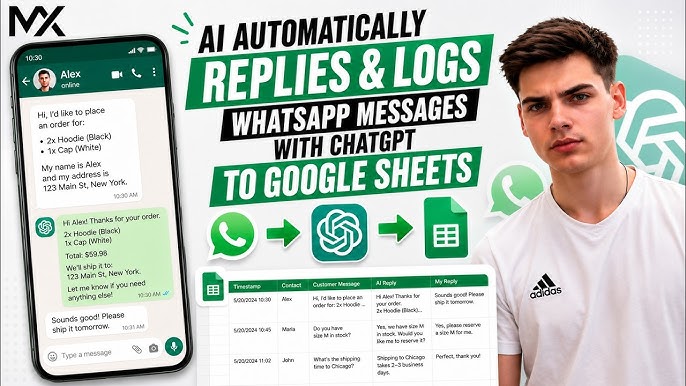
Author: digitalagencylanka@gmail.com

  • How to Automate WhatsApp Replies in Sri Lanka

    How to Automate WhatsApp Replies in Sri Lanka

    Streamline Your Customer Support: How to Automate WhatsApp Replies in Sri Lanka

    If you are running a business in Sri Lanka today, your phone is likely buzzing non-stop. Whether it’s a clothing boutique in Colombo 07, a boutique villa in Weligama, or a fast-scaling tech startup, Sri Lankans don’t want to email you. They don’t want to fill out contact forms.

    They want to text you on WhatsApp. And they expect a reply now.

    For a growing business, keeping up with that endless stream of “Price?”, “Is this available?”, and “Can I book for tomorrow?” is exhausting. If you step away for an hour, customers slip through your fingers and head straight to a competitor who replies faster.

    That’s where learning how to automate WhatsApp replies in Sri Lanka changes the game. By handing the repetitive lifting over to intelligent automation, you can keep your business open 24/7 without burning out your team.

    Why Manual Replies Are Costing Your Sri Lankan Business

    Relying on a human agent to manually copy-paste the same replies to 50 people a day is a bottleneck. It introduces three distinct problems:

    The “Midnight Lead” Problem

    Most Sri Lankans browse social media and shop late in the evening. If a customer messages you at 11:30 PM and has to wait until 9:00 AM the next morning for a reply, the impulse to buy is gone.

    High Employee Burnout

    Your team shouldn’t be spending hours typing out your bank details, delivery rates, or location pins over and over again. It drains their energy and takes them away from closing high-value sales that actually require a human touch.

    Inconsistent Responses

    When things get hectic, staff get tired. Typos slip in, tones get blunt, or crucial details like exchange policies get left out. An automated system delivers a perfect, on-brand response every single time.

    How to Automate WhatsApp Replies: The Options Available

    When looking to implement WhatsApp automation locally, you generally have two paths depending on the scale of your operation:

    1. The WhatsApp Business App (Basic Automation)

    For micro-businesses, the free WhatsApp Business app offers basic tools like “Away Messages,” “Greeting Messages,” and “Quick Replies” (templated shortcuts you trigger with a slash command). While helpful, it can’t dynamically answer specific customer questions or update your database automatically.

    2. Official WhatsApp Business API + AI Workflow Automation (Advanced)

    For businesses looking to truly scale, connecting the official WhatsApp Business API to custom automation workflows (using tools like n8n or AI agents) is the ultimate solution. This setup allows an AI agent to read an incoming message, understand the true intent behind it, fetch real-time data (like product stock or booking availability), and reply instantly in natural language.

    🚀 Ready to Automate Your Customer Support?

    Don’t let valuable leads sit in an unanswered inbox. At Taskforce AI, we build intelligent, custom AI agents that integrate directly with your WhatsApp, handling everything from FAQs to automated bookings seamlessly.

    Stop copy-pasting and start scaling. Call our official hotline today at +94 77 669 7566 to chat with our team and get your custom automation blueprint.

    Best Practices for Setting Up WhatsApp Automation

    To make sure your automated system feels helpful rather than robotic, keep these principles in mind:

    • Always Allow an Easy Human Hand-off: If a customer has a complex issue or gets frustrated, the AI should immediately flag the chat and pass it to a live team member.
    • Keep the Tone Natural: Write your automated scripts the way Sri Lankans actually talk—professional yet warm, friendly, and direct.
    • Localize Your Context: Ensure your system understands local terminology, whether it’s recognizing “Singlish” phrasing, understanding local bank transfers, or calculating specific island-wide delivery timelines.

    Frequently Asked Questions

    1. Will using an official WhatsApp API bot get my business number banned?

    No. If you build your automation using the official WhatsApp Business API (via Meta), your number is completely safe. Banning typically happens when businesses use unofficial, third-party scraping software or “grey-market” tools to spam users.

    2. Can the automated system understand Singlish or Sinhala/Tamil text?

    Yes! Modern AI models integrated into custom workflows are incredibly proficient at understanding conversational context. They can easily interpret mixed languages (Singlish) and reply accurately in the language or style the customer used.

    3. Do I need to keep my personal phone connected to the internet for this to work?

    If you are using the advanced WhatsApp Business API setup, no. The automation lives in the cloud. Your system will reply to customers instantly 24/7, even if your physical team phones are switched off or out of coverage.

    4. Can a WhatsApp bot integrate with my existing website or inventory system?

    Absolutely. Advanced workflow automation allows your WhatsApp API to talk directly to your website backend, Shopify store, Google Sheets, or CRM. It can check live stock levels or log a new booking the moment a customer confirms it via text.

    5. How long does it take to deploy a custom WhatsApp automation system?

    A basic FAQ and greeting setup can be deployed relatively quickly. For an advanced, fully integrated AI agent that handles specific business data, live bookings, or backend system updates, deployment typically takes between 2 to 3 weeks.

    Taskforce AI – Explore Our Solutions: Visit taskforceai.tech

    Chat with us on WhatsApp (0776697566)

  • How to Reduce Call Centre Costs in Sri Lanka

    How to Reduce Call Centre Costs in Sri Lanka

    How to Reduce Call Centre Costs in Sri Lanka

    If you are running a bank, an insurance firm, or a large-scale business process outsourcing (BPO) operation in Sri Lanka, you already know the real cost of a call centre. It isn’t just the infrastructure or the software licenses.

    It’s the human element.

    The math of managing a human-centric call centre in Colombo right now is brutal. High agent turnover, the constant and exhausting cycle of retraining staff, and the rocketing operational costs of 24/7 coverage are actively draining corporate margins.

    The industry average speaks for itself:

    The cost to hire, onboard, and train a single call centre agent in Sri Lanka typically takes 4 to 6 weeks—only for many to exit within the first 6 months. That is a massive, recurring operational leak.

    If your goal is to reduce call centre costs in Sri Lanka, you cannot solve a structural problem with a traditional hiring strategy. You solve it by automating the baseline.

    Here is exactly how conversational AI voice agents are rewriting the economics of customer support for Sri Lankan enterprises.

    The Core Friction: High Turnover, Continuous Training, Rising Cost

    Enterprise call centres face a unique set of operational bottlenecks that human staffing alone can no longer solve efficiently:

    • The Churn-and-Train Loop: In the financial and insurance sectors, onboarding an agent isn’t just about teaching them how to answer the phone. They must learn complex product portfolios, compliance guidelines, policy clauses, and system navigation. When that agent leaves, your investment resets to zero.
    • The Multilingual Demand: Sri Lankan consumers expect fluid support across English, Sinhala, and Tamil. Finding, hiring, and retaining agents who are fully trilingual and capable of maintaining standard quality across all three languages is incredibly difficult—and commands a premium wage.
    • The Abandoned Call Problem: Peak hours create massive queue times. Customers hang up out of frustration, leading to lost insurance leads, missed banking cross-sell opportunities, and penalized service level agreements (SLAs) for outsourcing companies.

    What a Taskforce AI Voice Agent Actually Does

    When we talk about deploying an AI voice agent, we are not talking about the frustrating “Press 1 for Sales, Press 2 for Support” legacy IVR systems. Those systems don’t reduce friction; they just delay it.

    We deploy intelligent, conversational voice agents that speak to your customers just like an experienced local agent would.

    Operational MetricHuman Call Centre TeamTaskforce AI Voice Agents
    AvailabilityRequires shifts, breaks, and overtime24/7/365, zero downtime
    Concurrent Capacity1 agent = 1 call at a timeInfinite scaling (handles up to 25 calls at once)
    Language DeliveryVaries by agent availabilityNative fluency in English, Sinhala, and Tamil
    Training Time4–6 weeks per new batchInstant deployment after system integration
    Operational CostHigh (Salaries, EPF/ETF, office space, hardware)Cut by up to 65%

    Our voice agents handle inbound and outbound calling workflows seamlessly by integrating directly into your existing core banking systems, CRM, or ticketing platforms.

    Native Multilingual Delivery (English, Sinhala, Tamil)

    Our voice agents are engineered specifically for the Sri Lankan linguistic landscape. The agent doesn’t just read a script; it understands context, local accents, and phrasing in English, Sinhala, and Tamil. Whether an insurance customer calls to check their claims status in Sinhala, or a banking customer wants to dispute a transaction charge in English, the agent responds instantly without needing a transfer.

    Instant Core System Integration

    The voice agent acts as a digital worker. It handles high-volume, low-complexity tier-1 queries completely autonomously.

    For instance:

    • Banking: Checking account balances, verifying recent transactions, activating credit cards, or resetting passwords.
    • Insurance: Directing claim status updates, checking policy renewal dates, and gathering initial accident details.
    • BPOs: Qualifying outbound leads, scheduling appointments, or executing customer satisfaction surveys.

    The Setup: Engineered for Enterprise Security

    We do not believe in generic, out-of-the-box configurations. A Taskforce AI voice agent is explicitly mapped to your specific corporate rules and compliance guidelines.

    1.Context and Rules Mapping:Week 1.

    We ingest your standard operating procedures (SOPs), product portfolios, compliance requirements, and edge-case protocols into the agent’s knowledge base.

    2.Integration & Multilingual Tuning:Week 2-3.

    We connect the agent directly into your database or CRM via secure APIs. The voice modulations, language switching parameters, and localized speech patterns are refined.

    3.Sandbox Testing & Guardrails:Week 4.

    The agent undergoes rigorous testing simulation to ensure data privacy, accurate information delivery, and graceful escalation protocols to your human managers when complex scenarios arise.

    4.Live Deployment & Analytics:Ongoing.

    The system goes live. Management receives a complete dashboard tracking call resolution rates, real-time transcripts, and clear cost-saving metrics.

    Stop Paying for Idle Time and High Turnover

    An AI voice agent doesn’t replace your entire customer support division—it protects your best human assets. By offloading up to 70% of repetitive, high-volume tier-1 calls to an autonomous voice agent, your senior human agents can focus entirely on high-value escalations, complex underwriting, or relationship management.

    You scale down your overhead, erase the headache of continuous agent turnover, and radically reduce call centre costs in Sri Lanka while providing instant, no-wait support to every single customer.

    The future of enterprise communication isn’t a larger building filled with more desks. It is an engineered, autonomous workforce.

    Q1: Can an AI voice agent accurately understand a local Sri Lankan accent or mixed-language phrases (e.g., “Singlish”)?

    Answer: Yes. Traditional global bots fail here because they are trained purely on generic Western datasets. Taskforce AI voice agents are specifically tuned for the Sri Lankan auditory environment. The LLM core recognizes localized speech patterns, distinct accents, and conversational transitions between languages—including instances where a customer starts a sentence in Sinhala and finishes it with an English technical term.

    Q2: How do your AI solutions align with the Personal Data Protection Act (PDPA) amendments in Sri Lanka?

    Answer: This is a vital priority for Sri Lankan enterprises. Following the enactment of the Personal Data Protection (Amendment) Act, No. 22 of 2025, companies have explicit guidelines regarding data governance and automated workflows.

    Taskforce AI voice agents are developed with these strict legal updates in mind:

    Explicit Consent Verification: For outbound campaigns or specific data retrieval tasks, our voice agents can be programmed to state clear disclosures and log explicit verbal consents directly into your database, shielding your firm from heavy statutory penalties.

    Flexible & Sovereign Storage: The latest 2025 amendments give local firms the flexibility to make judgment-based decisions on where data is stored based on its sensitivity. We offer deployment models across secure local resident facilities, sovereign setups, or public cloud infrastructures depending entirely on your corporate data classification strategy.

    Right to Review Automated Decisions: Under the PDPA, citizens maintain rights regarding automated profiling and decisions. Our systems are built to prioritize transparency—every automated voice interaction is logged with real-time text transcriptions, ensuring your compliance teams have clear audit trails and instant data retrieval capabilities if a customer requests a review.

    Q3: We use legacy banking/insurance core systems. How difficult is the integration process?

    Answer: We do not require you to overhaul your tech stack. Taskforce AI voice agents connect into your existing infrastructure via secure APIs. Whether you use a modern CRM or a legacy core database, the AI acts as a middleware agent—reading database records to pull data (like an insurance claim status or outstanding balance) and updating the ticket instantly, exactly like a human employee would do via their terminal.

    Q4: If the AI gets stuck on a complex customer query, what happens?

    Answer: The AI has strict guardrails and knows its boundaries. If a customer presents an edge case that falls outside the trained standard operating procedures (SOPs)—such as a complex loan restructuring request or an intricate insurance dispute—the agent executes a warm transfer. It instantly routes the call to a senior human manager along with a live, real-time text transcript of what the customer just said, so the customer never has to repeat themselves.

    Q5: How does the cost of deploying a Taskforce AI agent compare to hiring a traditional human agent team in Colombo?

    Answer: A human agent seat involves recursive overhead: basic salary, EPF/ETF, shift allowances, office real estate, workstations, and continuous management/training resources. Furthermore, a human can only take one call at a time. A Taskforce AI voice agent scales infinitely—it can handle 25 calls simultaneously during a peak hour surge for a fraction of the cost. On average, our enterprise clients see a 50% to 65% reduction in total operational cost per interaction within the first quarter of deployment.

    Taskforce AI – Explore Our Solutions: Visit taskforceai.tech

    Chat with us on WhatsApp (0776697566)

  • AI Automation for Sri Lankan Businesses: A Step-by-Step Guide to Integrating AI Agents

    AI Automation for Sri Lankan Businesses: A Step-by-Step Guide to Integrating AI Agents


    Why AI Agents Matter for Sri Lankan Businesses Right Now

    AI agents are changing how businesses across Colombo, Kandy, Galle, and the wider South Asian region run their operations. Unlike basic chatbots or scripted workflow tools, autonomous AI agents reason through tasks, hold context across conversations, and take action directly inside your existing business systems.

    For Sri Lankan companies facing rising operational costs, talent retention pressures, and growing customer expectations for 24/7 service in Sinhala, Tamil, and English — AI automation in Sri Lanka is no longer a future-state initiative. It is an immediate lever for OPEX reduction, customer experience improvement, and scaling output without expanding headcount.

    This guide walks Sri Lankan business owners, IT managers, and operations leaders through the practical steps of integrating AI agents into your business — with the local context, regulatory awareness, and cost realities that matter on the ground.


    What Are AI Agents and How Do They Work?

    AI agents are autonomous, decision-making systems that combine reasoning, memory, and tool access to complete real business tasks end-to-end. Where a chatbot replies and an automation script executes a fixed sequence, an AI agent thinks, plans, and acts — handing off to a human only when business rules or risk thresholds require it.

    The core building blocks of a modern AI agent are:

    • Reasoning and planning — evaluating context, applying business rules, and breaking down multi-step workflows.
    • Memory and context — retaining customer history, prior conversations, and transactional data across a task.
    • Tool and function calling — connecting to your CRM, ERP, WhatsApp, email, accounting system, or core banking platform to take real actions.
    • Guardrails and human review — enforcing security controls, compliance checks, and escalation paths.

    For Sri Lankan businesses, this means an AI agent can take an inbound voice call in Sinhala, log a motor insurance FNOL claim, check stock availability in your inventory system, send a WhatsApp confirmation, and escalate to a human agent only when the case falls outside its confidence threshold — all without a single staff member touching the workflow.

    AI Agents vs Chatbots vs RPA vs Copilots: What’s the Difference?

    Technology Primary Function Typical Sri Lankan Use Case Limitations Autonomy
    Chatbots Scripted Q&A and text dialogs FAQ handling on hotel or restaurant websites Static logic, no context retention Low
    RPA UI automation of repetitive tasks Data entry between disconnected systems Breaks easily when UIs change Medium
    Copilots Assistive suggestions inside apps Drafting emails, suggesting code Only responds when prompted Low to Medium
    AI Agents Reasoning + autonomous action End-to-end voice agents, booking agents, document processing Needs quality data and oversight Medium to High

    AI agents do more than chat — they execute workflows, adapt to exceptions, and escalate intelligently. For Sri Lankan businesses moving beyond first-generation chatbots, this is the meaningful step up.

    Where AI Agents Fit in Your Business Stack

    AI agents sit in the operational layer between your business logic and your transactional systems. They interact with databases, POS systems, CRM platforms, booking engines, and accounting tools through secure APIs. Properly integrated, AI agents support digital transformation across unstructured document processing, voice-based customer engagement, and cross-platform workflow orchestration — grounded in your actual business data and policies.


    When AI Agents Make Sense for Sri Lankan Businesses

    AI automation delivers the strongest ROI when applied to workflows that are high-volume, repeatable, and well-documented. Not every process is a candidate. Weigh feasibility, business value, and organizational readiness before deploying.

    High-Value Use Cases for AI Agents in Sri Lanka

    • High-volume, repetitive tasks — motor insurance claims intake (FNOL), bank loan pre-qualification calls, hotel and villa booking enquiries, restaurant reservations.
    • Document processing — extracting data from PDFs, contracts, customs paperwork, NIC scans, and receipts.
    • Business intelligence and reporting — automated daily sales reports, anomaly detection in transactions, KPI dashboards.
    • Voice agent automation — multilingual inbound and outbound calls in Sinhala, Tamil, and English for customer enquiries, appointment booking, and data collection.
    • Cross-platform workflow orchestration — moving data between WhatsApp Business, email, Google Sheets, your CRM, and your accounting tool.

    Workflows to Avoid for Now

    • Low-frequency, ad-hoc tasks — uniquely customized processes that don’t repeat.
    • Strategic or creative decisions — executive judgment, brand creative, or ambiguous requirements.
    • Regulated actions without oversight — payment approvals, legal execution, HR decisions all require structured human supervision.

    Is Your Sri Lankan Business Ready for AI Automation?

    You’re a strong candidate for AI agent integration if you have:

    • Established digital infrastructure and at least partially documented processes.
    • Data accessible through APIs, exports, or structured files.
    • Leadership sponsorship — typically the MD, CEO, or Head of Operations.
    • Basic data privacy and governance practices in place.
    • A genuine appetite to move past surface-level automation and into intelligent workflow transformation.

    Step-by-Step Guide to Integrating AI Agents in Your Sri Lankan Business

    Step 1 — Audit Your Existing Workflows

    Start with a structured audit. You can’t automate what you haven’t mapped.

    • Document repetitive, high-volume, and error-prone tasks across your operation.
    • Map every process stage — inputs, decision points, handoffs, outputs, exceptions.
    • Identify manual data re-entry, rework, and compliance checks.
    • Note which roles own which steps.
    • Highlight bottlenecks and steps that rely heavily on human judgment.

    Prioritize workflows using four criteria: time savings, manual effort reduction, risk or regulatory value, and feasibility based on your current systems and data availability.

    Step 2 — Define the Business Goal and Success Metrics

    Be specific. “Reduce invoice approval cycle from three days to three hours” is useful. “Improve operations” is not.

    Define KPIs upfront:

    • Cycle time (time to completion)
    • Accuracy improvement or error reduction
    • Throughput (tasks per day or per agent)
    • Customer satisfaction or response time
    • OPEX reduction or FTE reallocation

    Capture your pre-automation baseline. Without it, you cannot prove ROI later.

    Step 3 — Prepare Data and Knowledge Sources

    Reliable AI agents need reliable data. Many Sri Lankan businesses underestimate this step and pay for it later.

    • Cleanse and standardize data — remove duplicates, normalize fields, resolve inconsistencies, ensure recency.
    • Define agent-accessible sources — identify which databases, file shares, and knowledge repositories the agent will use, with proper access controls.
    • Implement retrieval-augmented generation (RAG) — connect your agent to internal documents, SOPs, pricing sheets, and product catalogues so it grounds every response in your real business context.

    Unstructured or legacy data multiplies risk. Sensitive datasets — customer NICs, payment information, medical records — must remain compliant with the Personal Data Protection Act of Sri Lanka and should always pass through human review before agent exposure.

    Step 4 — Choose the Right Use Case and Scope

    Start narrow. Scale fast. The most successful Sri Lankan AI deployments we see at TaskForce AI begin with one well-bounded workflow.

    • Pick a high-value, well-structured workflow with clear rules.
    • Document boundaries and exceptions explicitly — what’s in scope, what isn’t.
    • Assign an autonomy level appropriate to the risk:
      • Read-only — agent reviews and suggests, but does not execute.
      • Suggestion / draft — agent prepares the action, human approves.
      • Full autonomy — agent executes for low-risk, high-confidence steps.

    Step 5 — Design the AI Agent Workflow

    Workflow design is where projects succeed or stall. Map it out before you build.

    • Inputs — what triggers the agent? An inbound call, a new email, a webhook, a document upload?
    • Decision points — what business rules and validation logic apply at each step?
    • Actions — what does the agent do? Update a record, send a WhatsApp message, generate a quote, book a slot?
    • Outputs — where do results land? CRM, dashboard, email, Google Sheet?
    • Integrations — every API call should be secure, logged, and auditable.
    • Human-in-the-loop checkpoints — where does the agent pause for sign-off?

    Document every branch. Traceability is non-negotiable, especially in regulated industries like banking and insurance.

    Step 6 — Put Guardrails and Governance in Place

    Governance is what separates a working prototype from a production-grade deployment.

    Risk Example Failure Control Owner
    Excess permissions Agent edits records it shouldn’t touch Least-privilege access IT / Security Lead
    Inappropriate actions Sending unapproved emails or payments Human sign-off checkpoints Workflow Manager
    Data access breaches Customer data exposure Redaction and access controls Data Protection Lead
    Out-of-scope execution Agent acting outside hours or scope Policy rules and escalation Compliance Officer
    Incident gaps No rollback after failure Fallback, rollback, pause plans IT / Support

    Implement: least-privilege permissions, approval flows, comprehensive logging, regular control reviews.

    Step 7 — Test in a Safe Environment

    Don’t rush from prototype to production.

    • Offline testing — run staging data through the agent and compare outputs against a human benchmark.
    • Shadow runs — let the agent run alongside your team, observing live traffic without taking action.
    • Edge case simulation — deliberately throw ambiguous, rare, and broken inputs at the agent.
    • Hallucination probes — confirm the agent does not invent facts, prices, or policies under pressure.
    • Log review — examine every transaction during testing for anomalies.

    Workflow owners and IT must sign off jointly before live deployment.

    Step 8 — Deploy Gradually

    • Pilot launch — activate the agent for a small user group or data subset.
    • Internal testing — let trusted internal teams trial the agent and feed back.
    • Broader rollout — expand to additional teams, branches, or workflows.
    • Change management — train your team, publish FAQs, set up support channels. People accept what they understand.

    Step 9 — Monitor, Measure, and Improve

    AI agent deployment is not a one-time project. It is an operational capability that needs ongoing attention.

    • Monitor KPIs against your Step 2 baseline.
    • Collect structured feedback from staff and customers.
    • Track errors, drift, and confidence-score patterns.
    • Iterate on agent logic, prompts, and security rules.
    • Expand strategically — once one agent stabilizes, add the next workflow.

    Common Pitfalls Sri Lankan Businesses Should Avoid

    • Starting too broad — pick one workflow, win, then scale.
    • Neglecting data quality — automation amplifies bad data exponentially.
    • Weak governance — no permissions, no logs, no audit trail is a future incident waiting to happen.
    • No fallback plan — always have a way to pause, revert, or escalate to humans without service disruption.
    • Tracking technical metrics only — ROI lives in business outcomes: OPEX, cycle time, NPS, FTE reallocation. Not model accuracy in isolation.

    How TaskForce AI Helps Sri Lankan Businesses Deploy AI Agents

    TaskForce AI is a Sri Lankan AI automation agency headquartered in Colombo, with deployments across banking, insurance, hospitality, restaurants, and government tourism. Our voice agents handle inbound and outbound calls in Sinhala, Tamil, and English with a 65–70% call resolution rate and 99% data accuracy — 24 hours a day, with no shift breaks and no attrition.

    We work with clients across Sri Lanka, the UAE, and Oman on voice agent deployment, N8N workflow automation, document processing, and custom AI-powered dashboards. Every engagement follows the structured roadmap above, with full governance, multilingual capability, and OPEX-focused outcomes.

    If you’re considering AI automation for your Sri Lankan business, get in touch with the TaskForce AI team for a workflow audit and demo.


    Frequently Asked Questions About AI Agents for Sri Lankan Businesses

    Q: What is an AI agent and how is it different from a chatbot used by Sri Lankan companies?

    A: An AI agent is an autonomous system that reasons, plans, and takes real action across your business systems — placing calls, updating records, sending messages, processing documents. A chatbot only responds with scripted text inside one channel. For Sri Lankan businesses, the practical difference is this: a chatbot answers “what are your opening hours?”, an AI agent takes the booking, confirms it on WhatsApp, updates your booking system, and sends a reminder the day before — all in Sinhala, Tamil, or English, around the clock.

    Q: How much does AI automation cost for a small or mid-sized business in Sri Lanka?

    A: AI automation pricing in Sri Lanka depends on three factors: the use case (a single voice agent costs significantly less than a multi-system document processing pipeline), call or transaction volume, and the level of integration with your existing systems. Most TaskForce AI deployments are structured on an OPEX model — a fixed monthly fee covering hosting, support, and improvements — making the cost directly comparable to the salary of one staff member while delivering 24/7 multilingual capacity. A workflow audit and scoped quotation typically takes one to two weeks.

    Q: Can AI agents handle Sinhala and Tamil for Sri Lankan customer service?

    A: Yes. TaskForce AI voice agents handle inbound and outbound calls in Sinhala, Tamil, and English, with the agent automatically detecting the language the customer prefers. The production pattern most Sri Lankan businesses use combines a multilingual understanding layer — which interprets the customer’s speech in any of the three languages — with a response layer tuned to the agent’s brand voice. This delivers natural conversation quality without the brittleness of older translation-based approaches, and it scales across banking, insurance, hospitality, and restaurant use cases.


    This guide is provided for general orientation. For workflows involving regulated activity, financial transactions, or business-critical decisions, combine AI agent deployment with qualified human oversight and consult appropriate compliance experts before full automation.

    Taskforce AI – Explore Our Solutions: Visit taskforceai.tech

    Chat with us on WhatsApp (0776697566)


  • AI Automation Agents for Businesses in Sri Lanka

    AI Automation Agents for Businesses in Sri Lanka

    The Best AI Automation Agents for Businesses in Sri Lanka

    Organizations of medium scale encounter mounting operational and workforce demands as they seek growth beyond traditional tools but without the resources of full-scale enterprises. By 2026, intelligent automation agents – known as autonomous AI agents – deliver a practical method to automate workflows, drive efficiency, and fill operational capacity gaps. These agents autonomously manage tasks such as voice calls, document processing, workflow automation, and business intelligence, enabling rapid and sustained productivity increases.

    TaskForce AI develops intelligent automation agents designed for mid-sized enterprises to automate complex processes and scale operational capacity instantly – all without the time, cost, or inflexibility of traditional staff expansion. Early adoption of these advanced agents positions businesses to meet customer expectations, adapt to changing regulations, and respond to competitors with exceptional responsiveness. For a comprehensive overview, visit TaskForce AI autonomous automation solutions.

    What Are AI Agents?

    By 2026, AI agents are digital systems that autonomously plan, execute, and refine complex tasks based on business objectives. They are distinct from Robotic Process Automation (RPA) and chatbots:

    • Planning and adaptation: Agents interpret goals and sequence actions according to real-time context.
    • Multi-step workflows: Unlike rigid RPA scripts, AI agents navigate intricate, multi-stage processes, adapting to dynamic factors.
    • System integration: Modern AI agents connect with CRMs, ERPs, and communications tools, facilitating cross-platform operations.
    • Continuous learning: Leveraging large language models (LLMs), RAG methods, and data memory, agents improve efficiency and effectiveness over time.
    • Beyond reactive responses: While chatbots respond to queries, AI agents complete end-to-end business tasks such as client onboarding, invoice processing, or proactive sales calls.

    Key distinctions:

    • RPA: Suited for repetitive, rule-based tasks; low flexibility.
    • Chatbots: Designed for conversations or FAQ handling, limited to simple tasks.
    • AI Agents: Autonomous, process-aware, scalable, and context-driven; excel at orchestrating complex workflows, document handling, and voice interactions.

    2026: The Breakout Year for Medium-Sized Businesses

    Industry shifts in 2026 highlight why medium-sized companies are rapidly investing in AI automation agents:

    • 81% of organizations, including those in the mid-market, move autonomous agents from pilot stages to production deployments.
    • Tool democratization: No-code builder interfaces and pre-made workflow libraries allow broader adoption, significantly lowering the technical threshold.
    • Market access parity: Features previously exclusive to large enterprises become available to mid-sized companies, closing technology adoption gaps.
    • Budget reallocation: 78% of medium-sized companies plan higher AI budgets, prioritizing automation and strategic workforce scaling.
    • Automation prevalence: By late 2026, up to 75% of processes in medium and large organizations will involve AI agents, according to market analysts.

    Medium-sized businesses now deploy AI automation at rates that rival or surpass enterprise timelines, particularly in areas like sales, marketing, customer service, and IT operations.

    Key Benefits and Use Cases of AI Automation Agents

    Top Practical Applications

    AI agents provide direct solutions for tasks that are repetitive, high-volume, or require accuracy at scale. Notable applications include:

    • Sales and Lead Management
      • Automated and personalized follow-ups through CRM integration
      • Voice AI for lead qualification and appointment scheduling
      • Instant proposal and quote generation
    • Marketing Automation
      • Campaign scheduling and analysis across channels
      • Automated creation of social content
      • Performance tracking powered by integrated business intelligence
    • Customer Support
      • Ticket intake and triage with intelligent categorization
      • Escalation workflows with human validation as needed
      • Omnichannel response with integrated chat, email, and voice AI systems
    • DevOps and IT Operations
      • Incident alerting, auto-remediation, and system monitoring
      • Log file analysis for early problem detection
      • Orchestrating routine IT processes via workflow automation
    • Document Processing
      • Automated extraction and categorization of invoices, contracts, and compliance documents
      • Streamlined approval chains
      • Real-time audit logs for regulatory tracking
    • Business Intelligence
      • Monitoring data pipelines and generating actionable reports
      • Dashboard summaries for decision-makers
      • Process optimization recommendations

    Medium organizations increasingly deploy Deploy autonomous AI agents for workflow and voice call automation to relieve staff from repetitive work, lower error rates, and smoothly adjust to variable workloads.

    Quantifying ROI for the Mid-Market

    Measurable benefits for medium enterprises implementing intelligent automation agents:

    • Time reduction: Automation yields up to a 60% drop in manual labor across core business units.
    • Lower error rates: Context-aware agents decrease processing exceptions, with notable impact in compliance and finance processes.
    • Scalability: Dynamic agent deployment ensures businesses keep pace with surges or seasonal work without extra hiring.
    • Cost efficiency: Immediate ability to scale processes without fixed headcount keeps budgets lean and adaptable.

    Recent data (2026) illustrates impact:

    • 200%+ increase in productivity for sales prospecting and support workflows.
    • Invoice handling times fall by 50–80% due to workflow automation.
    • Automated voice qualification processes cut new lead response times by 70%.

    68% of medium organizations reported achieving ROI through externally supported agent deployments, circumventing in-house skills gaps. Widespread use of no-code tools has made agent adoption accessible to organizations with staff counts ranging from 50 to 750.

    The Best AI Automation Agents Reviewed

    Properly chosen, AI automation agents catalyze major advances in productivity, compliance, and customer experience. The following review summarizes top agents for medium-sized organizations, scored on features, pricing, and ecosystem fit.

    TaskForce AI Intelligent Automation Agents

    Features:

    • Autonomous multi-step workflow automation including voice calls, document processing, and advanced business intelligence
    • No-code builder for process customization
    • Enterprise-grade compliance controls and audit logs

    Pricing:
    Project-based, matched to workflow volume and integration needs, designed for mid-market affordability.

    Scalability:
    Rapid onboarding and instant support for business scaling; days to go live.

    Integrations:
    CRM, ERP, communication platforms, voice services.

    Best For:
    Organizations prioritizing unified business process, document, and voice AI automation with compliance needs.

    OctaProc Agent Suite

    Features:

    • Multi-agent DevOps automation
    • Automated IT tasks: monitoring, log analysis, remediation

    Pricing:
    Per-user licensing with volume discounts.

    Scalability:
    Suited to multi-department and multi-cloud deployments.

    Integrations:
    Azure, Jira, Slack, Splunk.

    Best For:
    IT and DevOps teams seeking extensible automation.

    VertexFlow AI Agents

    Features:

    • Document-driven automation
    • Multi-level approval workflow
    • BI dashboard integration

    Pricing:
    Annual plans from $15,000–$30,000.

    Scalability:
    Ideal for organizations with >10,000 monthly documents.

    Integrations:
    DocuSign, Salesforce, Office 365.

    Best For:
    Finance, procurement, and HR with heavy document workloads.

    PulseSync Autonomous Agents

    Features:

    • Voice AI for automated customer engagement
    • Real-time call transcription
    • Template prompt library for rapid deployment

    Pricing:
    Usage-based, starting at $2 per 100 calls.

    Scalability:
    Handles spikes and multilingual deployments.

    Integrations:
    Contact center software, CRM platforms, telephony infrastructure.

    Best For:
    Customer service and sales teams, call center automation.

    CortexOps Workflow Agents

    Features:

    • End-to-end DevOps pipeline automation
    • Advanced compliance monitoring

    Pricing:
    Annual contracts, $20,000–$25,000 per solution.

    Scalability:
    Supports more than 100 workflows concurrently.

    Integrations:
    AWS, Azure, Kubernetes, other cloud tools.

    Best For:
    IT operations, infrastructure, and compliance teams.

    Metrico BI Agents

    Features:

    • Business intelligence workflow automation
    • Real-time reporting and analytics

    Pricing:
    Starts at $1,500 monthly with scaling options.

    Scalability:
    Up to 250 dashboards supported simultaneously.

    Integrations:
    Data warehouses, Google Analytics, Power BI.

    Best For:
    Marketing and executive analysis, analytics-driven operations.

    FinaBot Document Agents

    Features:

    • Financial document extraction, SOC 2-ready controls
    • Optional human review flows

    Pricing:
    $12,000–$22,000 per tailored workflow.

    Scalability:
    Global deployment and cross-region data handling.

    Integrations:
    QuickBooks, SAP, Netsuite.

    Best For:
    Finance and compliance teams needing automated, regulated processing.

    ScaleStack No-Code Agents

    Features:

    • Visual agent builder with workflow templates
    • Fastest path to deployment without IT staff

    Pricing:
    $1,200 monthly, unlimited workflows.

    Scalability:
    Empowers non-technical business users for routine automation.

    Integrations:
    Legacy databases, email, calendaring tools.

    Best For:
    Business operations teams with minimal IT resources.

    Quick Comparison Table: AI Agents for Medium Businesses

    Provider Pricing Key Features Integrations Best For
    TaskForce AI Project-based Workflow & voice automation, BI, docs CRM, ERP, voice, comms Unified process automation at mid-market scale
    OctaProc Suite Monthly seat Multi-agent, DevOps, log analysis Azure, Jira, Slack IT/DevOps teams
    VertexFlow $15K–$30K/year Document workflows, BI, approvals DocuSign, Salesforce Finance, HR, procurement
    PulseSync Usage-based Voice AI, transcription, custom prompts Telephony, CRM, contact center Voice automation, call centers
    CortexOps $20K–$25K/project DevOps automation, compliance alerts AWS, Azure, Kubernetes Tech, security, deployment teams
    Metrico BI Agents $1,500+/month BI automation, custom analytics Warehouses, PowerBI, GA Marketing, analytics, reporting
    FinaBot $12K–$22K/workflow Finance documents, approvals, compliance QuickBooks, SAP Finance, regulated processes
    ScaleStack $1,200/month No-code agents, workflow recipes Legacy systems, email, calendar Ops teams, non-technical users

    Selection and Deployment: Choosing the Right AI Agent

    Criteria for Agent Selection

    Medium-sized organizations evaluate AI automation agents according to:

    • Pricing model: Choose project-based or flat-rate approaches aligned to workflow volume and business scale.
    • Integration compatibility: Assess direct connections with current tools (CRMs, ERPs, cloud, communications).
    • Scalability: Ensure capacity for growth in process volume, complexity, and department adoption.
    • Vendor support: Prefer providers offering deployment specialists with proven records in the mid-market.
    • Security and compliance: Prioritize agents with end-to-end audit logging and SOC 2 conformity for sensitive data.
    • Customization ease: No-code and low-code interfaces enable faster adjustments and adoption by business users.
    • Human-in-Loop capability: For regulated or mission-critical operations, select agents that support manual validation.

    Deployment Checklist for Medium Businesses

    Maximize the value from intelligent automation agents by following this stepwise process:

    1. Identify Suitable Tasks
      • Collaborate across departments (sales, marketing, ops) to inventory tasks ripe for automation – focus on repetitive, error-prone, or slow manual processes.
    2. Rank Use Cases for ROI
      • Score potential automations on time savings, quality improvements, and business impact.
    3. Shortlist Candidates
      • Compare agents by pricing, ecosystem compatibility, and ability to support non-technical users.
    4. Pilot a Targeted Workflow
      • Launch a high-impact process pilot (such as onboarding, call routing, or invoice automation).
      • Track KPIs: process time, cost per task, exception rates.
    5. Refine and Roll Out
      • Optimize task definitions, agent prompts, and workflow logic based on pilot feedback.
      • Scale to more departments after validating results.
    6. Seamless Data Integration
      • Connect agents directly to data sources and enterprise systems for accuracy and speed.
    7. Implement Oversight Controls
      • Add human review steps for financial or regulatory workflows as needed.
    8. Monitor Continuously
      • Use dashboards to capture performance, issue rates, and user input; perform ongoing improvements.
    9. Ensure Compliance Readiness (Informational Only)
      • For regulated domains, engage compliance experts to verify that automation agents meet all relevant data and security requirements.

    To accelerate deployment and maximize scalability, Scale your workforce instantly with TaskForce AI for process automation that adjusts in real time to business requirements.

    Challenges, Pitfalls, and Best Practices

    Common Pitfalls for Medium-Sized Businesses

    • Integration Delays
      • Legacy systems or insufficient mapping of workflows can slow automation rollouts. Prioritize agents with strong prebuilt connectors and open APIs.
    • Over-automation Without Safeguards
      • Removing manual validation in sensitive processes can introduce compliance or operational errors.
    • Skill Shortages
      • Relying entirely on in-house IT for AI projects stalls progress. Outsourced pilots or vendor-supported onboarding often mitigate this.
    • Scaling Too Quickly
      • Expanding automation coverage before proving ROI and stability risks wasted effort and business disruption.
    • Insufficient Real-Time Monitoring
      • Without ongoing dashboarding and agent supervision, performance and alignment can drift from business objectives.
    • Narrow Initial Pilots
      • Focus on one or two specific, high-value automations with clear objectives.
    • Integrate Human Validation
      • Insert manual checkpoints within sensitive or regulated workflows.
    • Refine Routinely
      • Adjust prompts, logic, and user access based on continuous feedback and data.
    • Leverage No-Code Tools
      • Enable functional teams to define, launch, and update workflows quickly, minimizing IT dependency.
    • Adopt Multi-Agent Models
      • Link agents across functions to streamline end-to-end workflows (e.g., sales lead triggers onboarding and finance checks).
    • Prioritize Compliance Features
      • Select products with built-in audit trails, SOC 2 options, and flexible data handling for easier regulatory alignment.

    Emerging Trends:
    Expect widespread adoption of interconnected multi-agent architectures where teams deploy agents that collaborate across business lines. Features such as real-time dashboards, self-healing processes, and automated oversight will become standard for mid-market automation.

    Frequently Asked Questions

    Q: How are AI agents different from RPA or chatbots in 2026?


    A: AI agents autonomously plan and execute complex, multi-step processes, integrate with business systems, and adapt over time. RPA automates predefined, repetitive steps. Chatbots offer conversational interfaces for simple inquiries but cannot manage sophisticated tasks.

    Q: Which processes show the fastest ROI for medium organizations?


    A: Sales follow-up automation, customer support ticketing, and invoice processing are the most impactful starting points.

    Q: How can businesses address the AI and automation skills gap?


    A: Most successfully adopt no-code tools, agent templates, and vendor-supported deployments, minimizing internal resource constraints.

    Q: What implementation costs should mid-sized companies expect?


    A: Typical projects range from $15,000 to $25,000, with ongoing subscription or usage fees for scale or support, tailored to workflow complexity.

    Q: What compliance concerns do automation agents pose? (Informational only)


    A: Review requirements for audit logs, SOC 2 or similar certifications, data privacy practices, and jurisdiction-specific controls with expert advisors.

    Q: Are programming skills necessary for deployment?


    A: Not for most modern agents. No-code and low-code systems allow business users to configure and iterate on workflows, though IT skills support more advanced customizations.

    Q: Which KPIs are most important?


    A: Track processing times, error/exception rates, user adoption, and direct financial savings to measure automation effectiveness.

    Q: How can organizations expand from pilots to full deployment?


    A: Begin with narrow pilots, refine using KPIs, and scale in phases while ensuring integration points and oversight expand proportionally.

    Q: What are the latest multi-agent trends for 2026?


    A: Interconnected agents work in tandem across departments, real-time observability tools monitor agent health, and businesses gain the flexibility to update workflows through prompt/version management.

    Q: Why do automation pilots occasionally fail in medium-sized organizations?


    A: Trouble often stems from poor workflow mapping, over-automation without human review, lack of clear success metrics, or skipping incremental scaling.

    Deploying autonomous AI agents with deliberate planning and quality oversight allows medium-sized businesses to boost efficiency, manage costs, and deliver superior results in 2026 and beyond. For actionable guidance on business process, voice, and document automation, visit Deploy autonomous AI agents for workflow and voice call automation.

    Taskforce AI – Explore Our Solutions: Visit taskforceai.tech
    Chat with us on WhatsApp (0776697566)

  • AI Booking Agent for Hair and Beauty Salons in Sri Lanka

    AI Booking Agent for Hair and Beauty Salons in Sri Lanka

    AI Booking Agent for Hair and Beauty Salons in Sri Lanka: Stop Losing Appointments to a Missed Call

    An AI booking agent for hair and beauty salons in Sri Lanka is not a luxury upgrade for a high-end Colombo spa. It is a practical fix for one of the most common and most costly problems in the salon business — the appointment that never got booked because nobody answered the phone.

    If you run a salon, you already know what that looks like. The phone rings during a colour treatment. You are elbow-deep in a blowout. Your front desk person has stepped out. The caller waits four rings, then hangs up. That was a booking worth Rs. 3,500 to Rs. 8,000 that just walked straight to the salon down the road.

    This article is about why that keeps happening, and what a voice agent actually does to stop it.


    The Appointment Booking Problem in Sri Lanka’s Salon Industry

    Most salons in Sri Lanka — from Colombo 3 to Kandy to Galle — operate on a very thin margin between fully booked and half-empty.

    The difference is rarely the quality of the service. It is the quality of the system that captures demand.

    Walk into most salons and you will find bookings managed through one of three ways: a physical appointment book, a personal WhatsApp, or word of mouth with a call-back later.

    None of those systems work when the phone rings at 7 PM on a Saturday and your stylists are finishing their last two clients of the day.

    Beyond missed calls, there is double-booking. Two clients arrive at the same time for the same stylist. One of them waits. One of them never comes back.

    There is the no-confirmation problem. A client books on Tuesday for Saturday, nothing is sent to them, life gets in the way, and they forget. Your stylist sits idle for an hour.

    These are not edge cases. These are standard weekly events in salons that are not running a structured booking system.


    What an AI Booking Agent for Hair and Beauty Salons in Sri Lanka Actually Does

    The AI booking agent answers your salon’s incoming calls. Every call. Every hour. Every day 24/7.

    It does not sound like an automated menu system. It conducts a natural conversation — asks the client what service they are looking for, which stylist they prefer if they have one, what date and time works for them, and confirms the appointment before ending the call.

    It is trained on your salon specifically.

    That means it knows your service menu — haircuts, colouring, keratin treatments, facials, waxing, nail services, whatever your salon offers. It knows your pricing. It knows your stylist roster and their individual working hours. It knows which slots are already taken and which are available in real time.

    When the call ends, two things happen immediately.

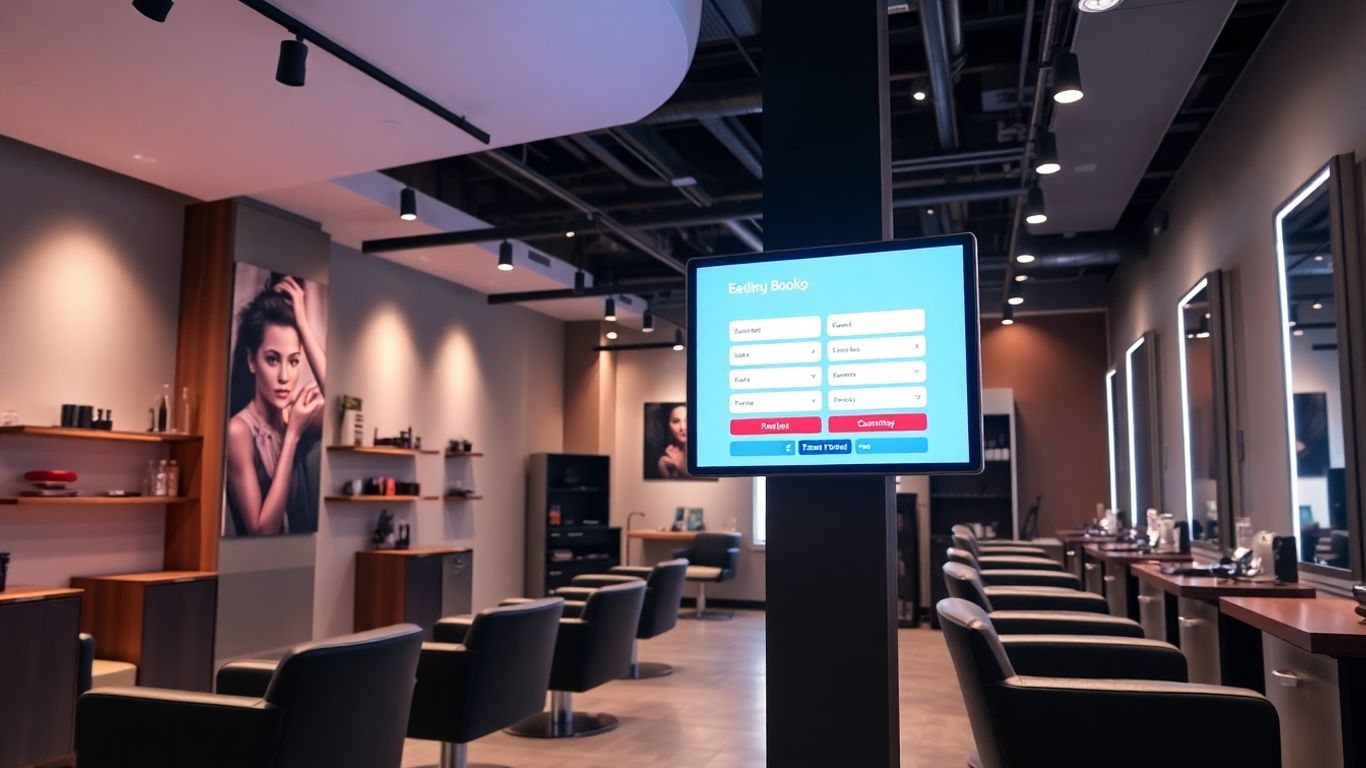
    The client receives a confirmation message with their appointment details — service, stylist name, date, time, and your salon address. Your appointment dashboard updates with the new booking, visible to your reception and management.

    No handwriting. No WhatsApp note to follow up on. No risk of a double-booking because two people were updating the diary at the same time.


    Trained on Your Salon — Customise the Ai Agent to your Business

    This is the part that separates a real AI booking agent for hair and beauty salons from a generic chatbot.

    Your Salon Service Menu, Your Pricing, Your Language

    The agent is trained before it goes live.

    If you offer a Brazilian blowout, a scalp treatment, semi-permanent lash extensions, and an express facial — the agent knows all of those by name. It knows the duration of each service, so it blocks the correct slot in the schedule. A 90-minute full colour and cut does not get squeezed into a 45-minute window.

    Pricing queries get answered accurately. If a new client calls and asks what a highlights treatment costs, the agent gives the correct answer — not a guess, not a “please hold while I check.”

    If your salon serves clients in Sinhala, Tamil, or English, the agent can be configured to handle calls in any of those languages. For salons outside of Colombo where the majority of callers speak Sinhala, this is not optional — it is essential.

    Stylist Schedules and Preferences

    Many clients book for a specific stylist. They have been going to the same person for two years and they are not interested in being reassigned.

    The agent understands this. It checks the named stylist’s availability and either confirms the slot or offers the next available time with that specific person.

    If the client has no preference, it offers the earliest available slot across your team.

    Special Requests and Notes

    Bridal trials. Client with a sensitive scalp. A repeat client who always prefers to sit near the window. A group booking for a hen party.

    The agent captures these notes during the call and they appear in the booking record on your dashboard. Your team sees them before the client walks through the door.


    The Salon Confirmation Message and the Ai Dashboard — Where the Real Value Shows Up

    The confirmation message is not just a courtesy. It cuts no-shows.

    When a client receives a message immediately after booking — with their name, appointment time, stylist, and service — they have a written record they will refer back to. The no-show rate in salons that send booking confirmations is consistently lower than those that rely on verbal agreements.

    For your team, the dashboard view is where operations get cleaner.

    The daily appointment sheet is populated automatically from every call the agent handles. Your reception sees the full day at a glance — who is coming in, at what time, for which service, with which stylist, and any notes the client provided.

    The call log sits alongside it. If a client disputes a booking time or a price they were quoted, the record of the call is there. There is no argument about what was said.

    Management gets a broader view over time. Which services are booking fastest. Which stylist is at full capacity three weeks in advance. Which day of the week is consistently under-booked and needs a promotion to fill it.

    This data does not require extra work to generate. It accumulates from the calls the agent handles every day.


    The Cost Conversation — What the Rental Model Means for a Salon

    Hiring a dedicated front desk person for your salon in Sri Lanka costs a minimum of Rs. 45,000 to Rs. 65,000 per month when you include statutory contributions. That person works eight hours a day, five or six days a week. They do not answer calls before they clock in. They do not take messages after they leave. And when they resign — which in the salon industry happens more often than most owners would like — you start the hiring and training process again.

    The TaskForce AI booking agent operates 24/7 on a fixed monthly rental. It answers calls from the moment your salon’s number is active until you decide to stop the service. There is no recruitment cost. No training period. No leave to manage.

    For a salon doing 60 to 100 appointments per week, the agent typically pays for itself within the first month through captured bookings that would otherwise have been missed calls.

    That is not a projection. That is what happens when every call gets answered and every booking gets confirmed.


    How TaskForce AI Sets Up the Agent for Your Salon

    The process is not complicated.

    We start with a briefing — your service list, your pricing, your stylist roster, their individual working hours, your booking policies, and any specific client handling preferences you have.

    From that, we build and train the agent on your salon’s specifics.

    We test it with real call scenarios before it goes live — simulating a first-time client, a repeat client booking for a named stylist, a group booking inquiry, a call in Sinhala, a caller who changes their mind mid-conversation.

    When it passes testing, it goes live on your number.

    From that point, you rent the agent on a monthly basis. When your service menu changes — new treatments added, prices revised, a stylist leaves or joins — the agent is updated as part of the arrangement. You are not managing a software subscription. You are working with a service that adapts to your business.


    Real Talk — What the Agent Does Not Do

    The AI booking agent handles inbound booking calls. That is its specific function.

    It does not manage the physical flow of clients in your salon on a busy Saturday afternoon. It does not handle complaints from a client who is unhappy with their colour result. It does not replace the skilled people behind your styling chairs.

    What it does is take the one task that gets dropped most consistently in a busy salon — answering the phone and capturing the booking accurately — and handle it without fail, at any hour, on any day.

    Your team focuses on the clients in the chair. The agent handles the clients calling in. That division of responsibility is what makes the system work.


    Conclusion: Every Missed Call Is a Booking Your Competitor Got

    The salon business in Sri Lanka is built on repeat clients and word of mouth. Both of those depend on one thing — a client who had a good experience and wants to come back.

    They cannot come back if their call never got answered the first time.

    An AI booking agent for hair and beauty salons in Sri Lanka closes that gap. It answers every call. It books every appointment accurately. It sends confirmation to the client and updates your team’s dashboard — all without a single staff member involved.

    TaskForce AI builds and rents these agents, customised to your salon’s specific setup — your menu, your team, your language, your workflow.

    Call Chrys Fernando at 0776697566 to discuss what the agent would look like for your salon.

    Visit taskforceai.tech to see what we build and how it works.

    Email us directly at chrys@taskforceai.tech if you want to start with a written conversation.


    Frequently Asked Questions

    Q: Can the AI booking agent handle multiple stylists with different working hours?

    A: Yes. Each stylist’s schedule is configured individually. If one stylist works Tuesday to Saturday and another works Sunday to Friday, the agent knows this and only offers availability that matches the correct working pattern. Requests for a specific stylist on their day off are handled accurately — the agent offers their next available day rather than booking into a slot that does not exist.

    Q: What happens to bookings that come in outside of salon hours — late at night or early morning?

    A: This is one of the primary reasons salons move to a voice agent. The agent is active around the clock. A client who calls at 10:30 PM on a Sunday to book for Wednesday morning will have their appointment confirmed immediately — with a confirmation message — without anyone at the salon needing to be involved. Those bookings sit in the dashboard ready for your team when they open in the morning.

    Q: How does the agent handle a caller who wants to reschedule or cancel an existing appointment?

    A: Rescheduling and cancellation handling is configured during the setup process. The agent can be trained to handle these calls — verifying the booking, offering alternative slots for reschedules, and updating the dashboard accordingly. The exact flow depends on your salon’s cancellation policy, which is factored into the agent’s training before it goes live.


    TaskForce AI (Private) Limited — Offices in Colombo, Dubai, and Muscat.

    Taskforce AI – Explore Our Solutions: Visit taskforceai.tech
    Chat with us on WhatsApp (0776697566)


  • AI Automation Booking Agent for Restaurants in Colombo

    AI Automation Booking Agent for Restaurants in Colombo

    AI Automation booking agent for Restaurants in Colombo: How a Voice Agent Is Replacing Your Front-of-House Phone

    AI automation for restaurants in Colombo is no longer a pilot project or a Silicon Valley concept. It is happening right now, in real dining rooms, with real menus, and real customers calling in to book a table for Friday night.

    The question is not whether this technology works. The question is whether your restaurant will use it before your competitor does.


    The Booking Problem Nobody Actually Talks About

    Your phone rings at 7:45 PM. Your floor staff is mid-service. The manager is handling a complaint at table nine. Nobody picks up.

    That caller just booked somewhere else.

    This is the single most common and most ignored revenue leak in the Colombo restaurant business. It does not show up in your POS report. It does not appear on your end-of-day summary. But it costs you covers every single week.

    Beyond missed calls, there is the human error problem. A reservation written in the wrong column. A booking taken for a table that was already committed to a walk-in. A customer who arrives to find no record of their name.

    These are not extraordinary events. They are Tuesday nights.

    Most restaurants in Colombo are still managing bookings through a physical diary, a WhatsApp thread, or a staff member who is also doing three other things at the same time. That is not a sustainable system when you are trying to scale, protect your reputation, or simply fill the room properly.


    What AI Automation for Restaurants in Colombo Actually Looks Like in Practice

    When I say AI automation for restaurants in Colombo, I am not talking about a chatbot that gives you a menu PDF link.

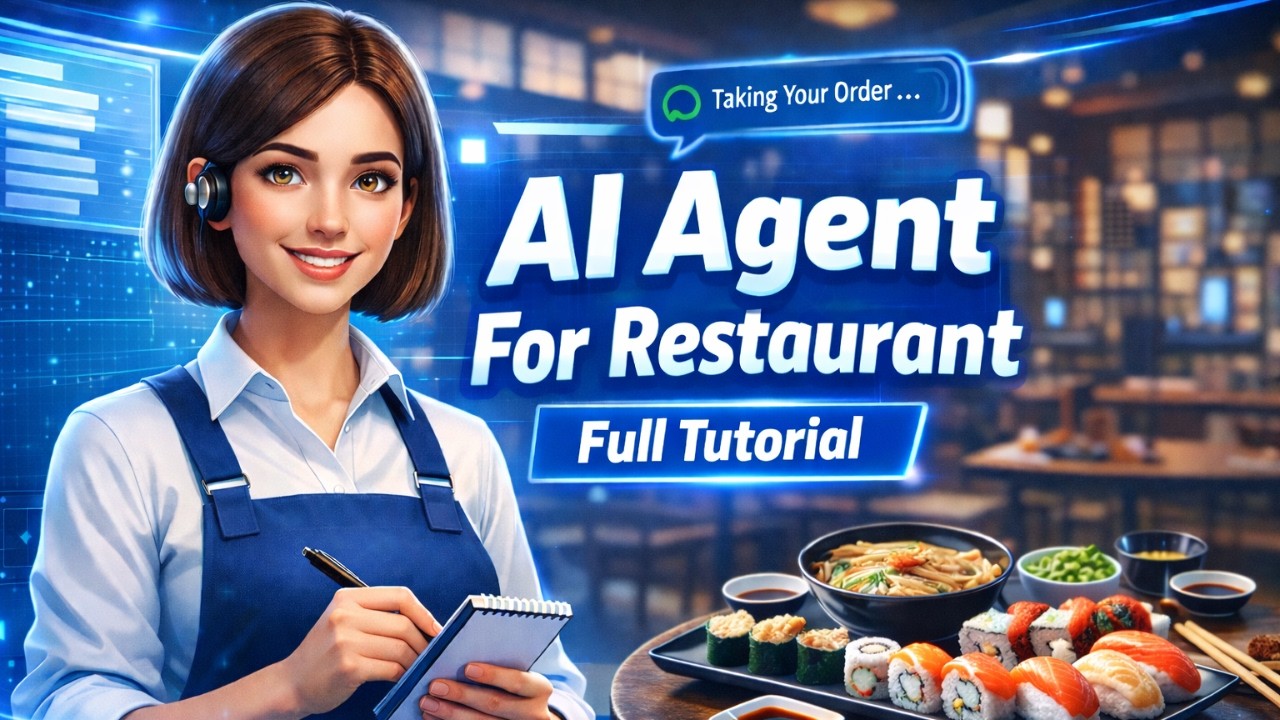
    I am talking about a voice agent — a trained, intelligent phone system that answers your restaurant’s incoming calls, understands what the customer wants, asks the right questions, and confirms the booking before ending the call.

    No hold music. No “I’ll check with the manager.” No missed calls at 8 PM because your staff is in the weeds.

    The agent handles the entire booking conversation. It understands context, not just keywords.

    If a caller says “we’d like something a bit quieter, maybe near the window, there are six of us and one is in a wheelchair,” the agent processes that, checks table availability against your actual floor layout, and either confirms or offers an alternative — just like a trained reservations person would.

    The difference is it does this at midnight too. And on public holidays. And while your team is focused on the guests already in the room.


    H2: Inside the Agent — Trained on Your Restaurant, Not a Generic Script

    This is where the setup matters.

    H3: It Knows Your Table Layout

    Before the agent goes live, it is trained on your specific floor plan. Table numbers, covers per table, indoor versus outdoor, private dining room capacity — all of it goes in.

    So when a customer asks for a table for ten near the terrace on a Saturday, the agent is not guessing. It is checking against your actual configuration and availability.

    H3: It Knows Your Menu and Pricing

    The agent is trained on your current menu. If a caller asks what your set menu costs, or whether you do vegetarian mains, or what time the kitchen closes — it answers accurately.

    This is not a live database query to your POS. It is a knowledgeable agent that has been briefed on your offering, the same way you would brief a new member of staff during induction.

    When the menu changes — seasonal updates, new additions, price revisions — the agent gets updated. That is part of the ongoing service.

    H3: It Collects Every Booking Detail Before It Hangs Up

    Name. Date and time. Number of guests. Any dietary notes or special requests. Contact number for the confirmation.

    The agent does not end the call until the record is complete. No half-entries. No “we’ll confirm later.”


    The Confirmation and the Call Log — No More Chasing Records

    Once the booking is confirmed in conversation, the system fires a confirmation message directly to the customer’s phone. It includes the booking details — date, time, party size, restaurant name, and any reference number.

    On your end, that same booking populates your daily bookings view on a custom dashboard built for your restaurant. You can see the full call log — what was said, what was booked, when the call came in. Your floor manager sees a clean bookings sheet for the day without having to chase anyone for information.

    If a booking needs to be amended or cancelled, there is a process for that too. The system keeps a record of changes.

    This is the part that usually surprises restaurant owners the most. Not the AI voice — they expect that. What surprises them is how clean their operations become on the back end.


    H2: Why AI Automation for Restaurants in Colombo Makes Financial Sense Right Now

    Let me be direct about the numbers.

    A trained human reservations person in Colombo costs upward of Rs. 60,000 to Rs. 80,000 per month when you factor in salary, EPF, ETF, and the indirect cost of managing that person. They work set hours. They call in sick. They leave. And you start again.

    The TaskForce AI voice agent operates on a monthly rental model. You pay a fixed monthly fee. The agent answers every call, every day, at any hour. It does not require a probation period. It does not need training every time your menu changes — it gets updated.

    For a mid-size restaurant in Colombo doing 40 to 80 covers per service, the maths are not difficult. If the agent captures even three additional bookings per week that would have otherwise been lost to a missed call or a booking error, it pays for itself.

    Beyond cost, there is the consistency argument. Every caller gets the same quality of experience. No attitude on a busy Saturday night. No wrong information because a new staff member did not know the menu yet. No booking lost because someone forgot to write it down.


    H2: How TaskForce AI Builds and Rents the Agent to Your Restaurant

    TaskForce AI does not sell you a software licence and walk away.

    The model is straightforward.

    We build the agent around your restaurant’s specific requirements — your table layout, your menu, your booking policies, your preferred confirmation message format, your dashboard view.

    We deploy it. We test it with real call scenarios. We train it on edge cases that matter to your operation — large group bookings, special occasion requests, calls in Sinhala or Tamil if that is relevant to your customer base.

    Once it is live, you rent the agent on a monthly basis. If your menu changes, we update the agent. If you add a private dining room, we update the floor configuration. If you want the confirmation message to reflect a new promotion, we adjust it.

    You are not buying a static product. You are getting an ongoing service that adapts to how your restaurant operates.

    This is what makes the rental model practical for restaurants. You are not committing to a capital expense on technology that may need to change in six months. You are paying for a working system that is maintained and updated as part of the arrangement.


    H2: What the Dashboard Gives Your Team Every Day

    The custom dashboard is not a complex analytics platform. It is built for operational clarity.

    Your floor manager logs in and sees today’s bookings. Time, covers, table assignment, any notes the agent captured during the call. The call log sits alongside it — so if there is ever a dispute about what was agreed, the record is there.

    Management gets a view of booking patterns over time. Peak days. Average party size. Call volumes by hour. Which time slots are filling fastest.

    This is information most Colombo restaurants do not have access to in any structured form right now. It comes as a by-product of simply using the agent. You are not doing extra work to generate reports. The data builds itself from every call the agent handles.


    H2: Real Talk — What This Does Not Replace

    The voice agent handles incoming booking calls. That is its role.

    It does not manage your floor on service night. It does not handle complaints from an unhappy table. It does not replace your floor manager or your kitchen team.

    What it does is take one specific, repeatable, high-volume task — answering the phone and logging bookings — and do it reliably, at every hour, without error.

    That frees your team to focus on the guests who are already in the room. That is where human hospitality matters. The phone call before they arrive does not need a person. It needs accuracy and availability.

    The agent provides both.


    Conclusion: The Restaurant That Picks Up Every Call Wins

    The Colombo dining market is competitive. Customers have options, and they will book with whoever responds first.

    A missed call at 8 PM on a Thursday is not just a missed booking. It is a customer who went to your competitor, had a good experience, and will go back there instead of you.

    AI automation for restaurants in Colombo is the most direct answer to that problem. Not in theory. In practice, today, with a system that is already running in the market.

    TaskForce AI builds and rents restaurant voice agents customised to your floor, your menu, and your team’s workflow.

    Call Chrys Fernando at 0776697566 to find out what the agent would look like for your restaurant.

    Visit taskforceai.tech to learn more about what we build.

    Email us at chrys@taskforceai.tech if you’d prefer to start with a written conversation.


    Frequently Asked Questions

    Q: Can the voice agent handle calls in Sinhala or Tamil, not just English?

    A: Yes. TaskForce AI builds multilingual agents. If your customer base calls in Sinhala or Tamil, the agent can be trained to handle those conversations. This is particularly relevant for restaurants outside of Colombo 3 and Colombo 7, where the caller profile is more mixed. The language configuration is part of the setup discussion.

    Q: How long does it take to set up the agent for my restaurant?

    A: It depends on the complexity of your table layout and menu, but a standard deployment takes between two to four weeks from the initial briefing to go-live. That includes training the agent, testing it with real call scenarios, setting up the dashboard, and configuring the confirmation message flow. You are not waiting months to see results.

    Q: What happens if a customer calls about something the agent does not know how to handle?

    A: The agent is designed to handle booking calls specifically. If a caller asks something that falls outside its training — a very specific complaint, an unusual catering request, a call that needs a manager — the agent is configured to acknowledge the caller professionally and direct them appropriately, rather than giving a wrong answer. Part of the setup process involves mapping these edge cases so the agent behaves correctly in your context.


    TaskForce AI (Private) Limited — Offices in Colombo, Dubai, and Muscat.

    Taskforce AI – Explore Our Solutions: Visit taskforceai.tech
    Chat with us on WhatsApp (0776697566)

  • The AI Concierge for Hotels  in Sri Lanka

    The AI Concierge for Hotels in Sri Lanka

    An AI concierge is an intelligent,conversational digital asset that uses Ai, NLP,and task driven Automation to provide 24/7 personalised services such as answering room availability and pricing ,making bookings and managing customer requests.

    Your phone rings at 11pm.

    A guest wants to know if the deluxe room with the garden view is available for the long weekend in August.

    Your front desk is closed.

    The call goes unanswered.

    The guest books with a competitor.

    That scenario plays out in Sri Lankan hotels every single night — and most owners don’t even know how much revenue is quietly walking out the door.

    This article is for hotel owners and general managers who are tired of losing direct bookings to OTAs, tired of paying 15–25% commission on every room sold, and tired of guests getting no response outside of office hours.

    The AI Concierge for Hotels that drives direct bookings and automates guest communication is not a future concept.

    It is running right now — integrated directly into hotel PMS systems, connected to Facebook and Instagram paid ads, and booking rooms through WhatsApp without a single staff member involved.

    Here is what it does, how it works, and why Sri Lankan hoteliers should be paying close attention.


    The Real Cost of Missed Enquiries and OTA Dependency

    Let me be direct about something most hotel consultants avoid saying out loud.

    Every enquiry that goes unanswered after hours is a confirmed booking for your competitor.

    Every booking that comes through Booking.com or Expedia costs you between 15% and 25% of that room’s value — before tax, before your operational costs, before profit.

    If your hotel generates LKR 5 million a month in OTA bookings, you are handing between LKR 750,000 and LKR 1.25 million to a platform every single month.

    That is not a distribution cost. That is a revenue leak.

    The average Sri Lankan boutique hotel or resort receives 40 to 80 direct enquiries per week across WhatsApp, email, Facebook Messenger, Instagram DMs, and phone calls.

    How many of those get a response within 5 minutes?

    Research consistently shows that the probability of converting a lead drops by over 80% if the response takes longer than five minutes.

    Most hotel teams are responding in hours — if at all.

    This is the problem that the AI Concierge for Hotels solves.


    What an AI Hotel Booking Agent Actually Does

    This is where I want to cut through the noise and give you the practical picture.

    How the AI Concierge Connects to Your PMS

    The AI booking agent we have built at TaskForce AI integrates directly with your Property Management System.

    That means the agent has live access to your room inventory, room types, pricing, availability, and promotional rates — in real time.

    When a guest asks “Is the Superior Ocean View room available from the 14th to the 18th of September?” — the agent checks your PMS, confirms availability, states the current rack rate or promotional price, and offers to make the booking on the spot.

    No human involved.

    No delay.

    No “I’ll check and call you back.”

    The guest can complete a confirmed reservation through a WhatsApp conversation — and the booking is written directly into your PMS as if your front desk agent had taken it manually.

    Room types, add-ons, early check-in requests, special occasion setups — all captured, all logged, all confirmed to the guest within seconds.

    Automating Guest Communication Before, During and After the Stay

    The AI concierge does not stop at the booking.

    Pre-arrival: the agent sends automated WhatsApp messages with check-in details, room confirmation, directions, and upsell prompts for airport transfers, spa bookings, or restaurant reservations.

    During the stay: guests can message the agent for housekeeping requests, room service queries, local recommendations, or checkout time extensions.

    Post-stay: the agent sends a personalised thank-you message, a review request directing guests to Google or TripAdvisor, and an early-bird offer for their next visit.

    This is not a chatbot replying with generic answers.

    This is a trained AI agent that knows your hotel, knows your room types, knows your pricing, and communicates in the tone and language you specify.


    The META Agent: Turning Paid Ads Into Direct WhatsApp Bookings

    How Facebook and Instagram Ads Connect to Your AI Booking Agent

    This is the part that most hotel marketing teams have not seen before.

    The META agent we offer at TaskForce AI connects your Facebook and Instagram paid advertising directly to your AI booking agent via WhatsApp.

    Here is how the flow works in practice.

    A prospective guest sees your hotel’s Facebook or Instagram ad — a weekend package, a honeymoon offer, a festive season promotion.

    They click the ad.

    Instead of being taken to a landing page where they fill in a form and wait for a callback — which is where most leads die — they are taken directly into a WhatsApp conversation with your hotel’s AI booking agent.

    The agent greets them by name, presents the offer details, checks live availability, answers their questions, and processes the booking — all within the same WhatsApp thread.

    The lead conversion happens inside the ad interaction.

    No form. No email chain. No waiting.

    For hotels running paid campaigns on Meta, this single change in the customer journey can double the return on ad spend because you are capturing and converting intent at the exact moment it is highest.

    Why This Matters for Sri Lankan Hotels Targeting International Guests

    Tourists researching hotels in Sri Lanka are active on Instagram and Facebook.

    They are browsing at night, in their own time zones, which means 9pm in the UK is 2:30am in Sri Lanka.

    Your staff are asleep.

    Your AI booking agent is not.

    The German couple planning their two-week Sri Lanka holiday who finds your Sigiriya property on Instagram at 10pm Frankfurt time gets an instant response, live availability, and a booking confirmation — before they even consider looking at a competitor.

    That is a direct booking you would have lost to an OTA by morning.


    The Operational Reality: What Changes When You Deploy This

    What Your Front Desk Team Stops Doing

    I have seen this firsthand with hotel clients we have deployed the AI concierge for.

    The front desk team’s inbound enquiry load drops significantly — particularly for routine questions about pricing, availability, room types, and directions.

    Staff are no longer manually responding to the same 20 questions they answer 15 times a day.

    They are freed up to handle the interactions that genuinely require a human — a difficult guest, a complex group booking, an in-person request that needs judgement.

    The AI handles the volume. Your team handles the relationship.

    What Your Revenue Manager Gains

    Every enquiry is captured and logged.

    Every conversation is stored with the guest’s name, contact number, room preference, dates, and budget — regardless of whether they booked or not.

    Your revenue manager now has a lead database built automatically from every ad click, every WhatsApp message, every Instagram DM — without a single manual data entry.

    That data feeds directly into remarketing campaigns, seasonal offers, and occupancy management decisions.


    What This Costs vs. What It Returns

    Direct Booking Revenue vs. OTA Commission

    The honest conversation about AI hotel technology always comes back to cost.

    Here is the calculation I walk every hotel owner through.

    If deploying an AI concierge increases your direct booking ratio by 10% — shifting that volume from OTA to direct — and your average room rate is LKR 25,000 per night with 20 rooms running at 70% occupancy, that 10% shift saves you approximately LKR 600,000 to LKR 900,000 per month in OTA commission alone.

    The AI concierge operates on an OPEX model — a fixed monthly fee based on usage, with no capital expenditure and no long-term lock-in.

    The return on investment in most deployments is visible within the first 60 to 90 days.


    H4: Real Questions Hotel Owners Ask Before They Commit

    “Will my PMS support this integration?”

    We have built integrations with the most common PMS platforms used by Sri Lankan hotels.

    If yours is on a less common system, we conduct a technical assessment before any commercial commitment — no surprises.

    “What if the AI gives the wrong price or availability?”

    The agent reads live data from your PMS. It does not store pricing internally or guess.

    If availability changes between enquiry and booking, the agent flags it and offers the guest alternatives — exactly as a trained reservations agent would.

    “Can it handle Sinhala or Tamil guests?”

    Our agents currently operate in English with multilingual capability in development.

    For properties targeting a mixed local and international audience, we have a recommended approach for this which we walk through in the consultation.


    Conclusion: The AI Concierge for Hotels Is Not a Luxury. It Is a Revenue Decision.

    The hotels that move first on direct booking automation will build a structural advantage that is very difficult for competitors to close later.

    Every month you delay is another month of OTA commission paid, another month of midnight enquiries going unanswered, and another month of ad spend that converts at half the rate it should.

    The AI Concierge for Hotels that drives direct bookings and automates guest communication is deployed, tested, and running in real properties right now.

    You can see it working — live, with your own room types and pricing — in a 30-minute demonstration.


    Book Your Consultation and Demo Today

    Talk directly to Chrys Fernando of TaskForce AI — who has spent the past decade building and deploying AI automation for hotels and hospitality businesses across Sri Lanka and the Middle East.

    📞 Call or WhatsApp: +94 77 669 7566

    📧 Email: Chrys@taskforceai.tech

    🌐 Visit: www.buzznationlanka.com

    The call is free. The demo is live. The decision is yours.


    Frequently Asked Questions

    Q: What is an AI Concierge for Hotels and how does it drive direct bookings?

    A: An AI Concierge for Hotels is an intelligent, automated agent that handles guest enquiries, checks live room availability from your PMS, provides pricing, and completes bookings — all through channels like WhatsApp, Facebook Messenger, or your website chat. It drives direct bookings by responding instantly at any hour, removing the delay that causes guests to abandon an enquiry and book through an OTA instead.

    Q: Can the AI hotel booking agent integrate with my existing Property Management System?

    A: Yes. The AI booking agent connects directly to your PMS to read live room availability, room types, and pricing — and can write confirmed reservations back into the system. Integration compatibility is confirmed during the initial consultation before any commitment is made.

    Q: How does the META agent work with Facebook and Instagram hotel ads?

    A: The META agent connects your paid Facebook and Instagram advertising to your AI booking agent via WhatsApp. When a potential guest clicks your ad, they are taken directly into a WhatsApp conversation with your hotel’s AI agent — which greets them, presents the offer, checks availability, answers questions, and processes the booking within the same conversation. This removes the friction of landing pages and contact forms, converting ad interest into confirmed bookings in real time.

    Taskforce AI – Explore Our Solutions: Visit taskforceai.tech

    Chat with us on WhatsApp (0776697566)


  • AI Voice Agent Sri Lanka

    AI Voice Agent Sri Lanka

    AI Voice Agent Sri Lanka

    By TaskForce AI | taskforceai.tech | +94 77 669 7566

    Your phone rings at 11pm.

    A potential customer wants to book a table, ask about your rates, or find out if you’re open tomorrow.

    Nobody picks up.

    They call the next place on Google.

    You just lost a customer — not because your product was bad, but because no one was there to answer.

    This is the single most expensive problem in Sri Lankan hospitality, retail, and services right now.

    And an AI voice agent fixes it completely.

    What Is an AI Voice Agent?

    An AI voice agent is a phone-based artificial intelligence system that answers incoming calls, holds a full natural conversation with your customer, collects the information you need, and either resolves the query or escalates it to a human — all without any human staff involved.

    It is not a robotic IVR that says “press 1 for sales.”

    It is not a chatbot.

    It is a fully conversational AI that listens, understands, responds, and acts — in real time, in the language your customer speaks.

    In Sri Lanka, that means English, Sinhala, or Tamil.

    Why Sri Lankan Businesses Need This Now

    Sri Lanka has a staffing problem that nobody talks about openly.

    Good front-of-house staff are hard to find, harder to keep, and expensive to train.

    The average business loses 3 to 5 customer enquiries every single day outside of business hours.

    Multiply that over a month.

    Multiply that over a year.

    That is not a small number.

    An AI voice agent is available 24 hours a day, 7 days a week, 365 days a year.

    It never calls in sick.

    It never puts a customer on hold for 8 minutes.

    It never forgets to take down the customer’s phone number.

    And it costs a fraction of what a full-time receptionist costs.

    Let’s Chat on WhatsApp

    How an AI Voice Agent Works in Sri Lanka

    Here is what happens from the moment a customer calls your business:

    Step 1 — The call is answered instantly. Within one ring, your AI agent greets the caller by name if they are a returning customer, or with a warm, professional welcome if they are new.

    Step 2 — The agent understands the caller’s intent. Using large language model technology, the agent processes what the customer is saying — whether they are asking about your menu, requesting a reservation, enquiring about a product, or reporting a problem.

    Step 3 — The agent responds naturally. Not in a robotic, scripted way. In a conversational, human-like tone that matches your brand. In English, Sinhala, or Tamil depending on what language the customer uses.

    Step 4 — The agent collects the right data. Name. Contact number. Booking details. Product enquiry. Whatever your business needs — the agent captures it, structures it, and logs it automatically.

    Step 5 — The agent takes action or escalates. For simple queries — bookings, FAQs, opening hours — the agent resolves them on the spot. For complex issues requiring a human, it collects all details and flags it to your team via WhatsApp or email, immediately.

    Step 6 — You receive a full summary. After every call, your team gets a WhatsApp message with a structured summary of what was discussed, what was collected, and what action is required. No call logs to manually review. No missed information.

    Real Examples: AI Voice Agents Already Working in Sri Lanka

    Priya — AI Sales Agent for Winrich.lk

    Winrich is a commercial kitchen and bakery equipment supplier based in Sri Lanka.

    Before deploying their AI voice agent, Priya, inbound sales calls were frequently missed, and after-hours enquiries were lost entirely.

    Priya now handles inbound calls in English, Sinhala, and Tamil — trilingually.

    She collects the caller’s name, mobile number, and product interest within the first 60 seconds of the call.

    She identifies the product category, confirms availability, and flags hot leads to the sales team via WhatsApp in real time.

    No call drops. No missed leads. No after-hours gaps.

    Tanya — AI Reservations Agent for Tree House Chalets

    Tree House Chalets is a boutique eco-resort handling inbound reservation enquiries around the clock.

    Tanya answers every call, collects check-in and check-out dates, the number of guests, special requests, and the caller’s contact details — and sends a structured WhatsApp summary to management within seconds of the call ending.

    The result: zero missed reservation enquiries, even at midnight.

    Let’s Chat on WhatsApp

    Which Sri Lankan Industries Benefit Most from AI Voice Agents?

    Hotels and Resorts in Sri Lanka

    Handle room availability enquiries, booking requests, check-in details, and special requests — 24 hours a day. No more missed calls during dinner service. No more guests waiting on hold.

    Restaurants and Bars in Sri Lanka

    Take reservations, answer menu questions, confirm events, and handle VIP table requests — even when your team is in the middle of service.

    Healthcare and Clinics in Sri Lanka

    Book appointments, confirm timings, answer FAQ about services, and capture patient details — without tying up your front desk staff.

    Insurance Companies in Sri Lanka

    Collect accident reports, capture policy details, and dispatch assessors faster than any human call centre team.

    Real Estate Companies in Sri Lanka

    Qualify leads, capture property enquiry details, and book viewings — automatically, at any time of day.

    Retail and E-Commerce in Sri Lanka

    Answer product questions, handle order status calls, and collect customer feedback — without adding headcount.

    What Makes a Good AI Voice Agent for Sri Lanka?

    Not all AI voice agents are built equal.

    Building one that actually works for Sri Lankan businesses requires getting several things right.

    Multilingual capability is non-negotiable. Your customers speak English, Sinhala, and Tamil. Your agent must handle all three fluently — and ideally detect the caller’s language automatically and switch to it.

    Low latency is critical. A voice agent that pauses for 4 seconds between every response will frustrate your customers and destroy trust. The best deployments in Sri Lanka run on sub-2-second response times.

    The data collection must be structured. The point of the agent is not just conversation — it is to capture the right information and get it to the right person instantly. Name, mobile number, and the core query need to be collected reliably on every call.

    Integration with your existing tools matters. The agent should connect to WhatsApp, your CRM, your booking system, or your email — so that captured data flows automatically into your workflow. No manual data entry. No copy-paste.

    The voice must sound natural. Sri Lankan customers will hang up on a robotic voice. The agent needs to sound warm, professional, and human — in all three languages.

    How Much Does an AI Voice Agent Cost in Sri Lanka?

    This is the question every business owner asks.

    Here is the honest answer.

    A professionally built, multilingual AI voice agent for a Sri Lankan business typically starts at LKR 40,000 per month.

    Compare that to the fully loaded cost of a full-time receptionist:

    Salary: LKR 50,000 to 80,000 per month

    EPF/ETF: LKR 10,000+ per month

    Training time: 2 to 4 weeks

    Working hours: 8 to 9 hours, 5 to 6 days a week only

    Your AI voice agent works 24 hours a day, 7 days a week, from day one.

    It does not require EPF.

    It does not take annual leave.

    It does not resign after 6 months.

    The ROI calculation is not complicated.

    How Long Does It Take to Deploy an AI Voice Agent?

    At TaskForce AI, a standard AI voice agent deployment for a Sri Lankan business takes 7 to 14 working days from brief to go-live.

    This includes:

    Discovery and scripting of the agent conversation flow

    Voice selection and language configuration

    Integration with WhatsApp, CRM, or booking system

    Testing across real call scenarios

    Go-live and monitoring

    There is no lengthy software procurement process.

    There is no hardware to install.

    You do not need a dedicated IT team.

    You need a business phone number, a clear brief on what the agent should do, and a week and a half.

    Frequently Asked Questions About AI Voice Agents in Sri Lanka

    Can the agent speak Sinhala? Yes. Our agents are built on large language model technology that understands and responds in Sinhala. For premium voice quality, we use a hybrid architecture where the AI understands Sinhala input and responds in natural, accented English or code-switches based on the caller’s preference.

    What happens if the customer asks something the agent doesn’t know? The agent is built to handle this gracefully. It acknowledges the question, captures the caller’s contact details, and escalates to your team via WhatsApp — so nothing falls through the cracks.

    Can the agent make outbound calls? Yes. In addition to handling inbound calls, AI voice agents can be deployed for outbound campaigns — appointment reminders, payment follow-ups, satisfaction surveys, and lead qualification.

    Does the agent work with my existing phone number? Yes. We configure the agent to your existing business number or set up a new local Sri Lankan number — so your customers call the same number they always have.

    Is the conversation recorded? Yes. Full call transcripts and structured summaries are available after every call, giving you complete visibility of every customer interaction.

    What if I want a human to take over mid-call? We build warm transfer capability into every agent — if the caller requests a human or the agent detects a situation requiring human intervention, it hands off the call seamlessly.

    The Bottom Line

    Every missed call is a missed opportunity.

    Every after-hours enquiry that goes unanswered is a customer who found someone else.

    An AI voice agent does not replace your team.

    It covers the gaps your team cannot cover — the 11pm calls, the lunchtime peak, the public holiday enquiries, the calls that come in while your staff are busy with someone else.

    And it does it better than a human receptionist in one specific way: it never forgets to take down the phone number.

    Get Your AI Voice Agent Built by TaskForce AI

    TaskForce AI is Sri Lanka’s leading AI voice agent and automation agency.

    We have built and deployed AI voice agents for hotels, resorts, restaurants, equipment suppliers, and insurance companies across Sri Lanka and the Middle East.

    Our agents handle English, Sinhala, and Tamil.

    They integrate with WhatsApp, your CRM, and your booking system.

    And they are live within two weeks.

    Ready to experience the best AI and mobile app development in the region? Partner with Taskforce AI for cutting-edge software solutions, intelligent automation, and the finest digital innovation on the island.

    Taskforce AI – Explore Our Solutions: Visit taskforceai.tech

    Chat with us on WhatsApp (0776697566)


  • The Future of Voice AI: TaskForce AI’s Innovative Capabilities

    The Future of Voice AI: TaskForce AI’s Innovative Capabilities

    Voice AI is reshaping enterprise automation, rapidly evolving from basic scripted systems to AI-driven entities that can execute complex workflows. As communication channels converge and automation becomes central to productivity, the adoption of autonomous AI agents for voice calls, document processing, and business intelligence is expanding across multiple sectors. Organizations using intelligent automation technology are observing measurable improvements in operational efficiency, customer experience, and business agility.

    TaskForce AI drives this progress, providing a platform designed for true automation – enabling deployment of intelligent agents capable of executing tasks, processing documents, and extracting real-time insight from business data. The following article details the evolution of enterprise AI for voice automation, highlights key capabilities, explores technical foundations, explains practical results, and outlines best practices for successful enterprise implementation.

    Enterprise decision-makers, IT professionals, business analysts, and operations managers will find insight here on scaling organizational capabilities through autonomous AI agents and workflow automation.

    What Voice AI Has Become

    Voice AI has moved far beyond traditional IVR systems, defining a new standard for enterprise automation that delivers dynamic, context-sensitive interactions and seamless workflow execution.

    Evolution Beyond Traditional IVR Systems

    The earliest Interactive Voice Response (IVR) solutions limited users to inflexible menu options and led to high abandonment rates. These systems followed static, rules-based logic and failed to accommodate callers’ intent or context. Later, voice assistants improved language recognition, but still relied heavily on scripting.

    Modern autonomous AI agents understand nuanced natural language, interpret intent, and maintain robust context across sessions. This technology bridges the divide between a caller’s needs and the full execution of related enterprise processes.

    Transition to Autonomous AI Agents in Enterprise Settings

    Advances in enterprise AI now deliver agents with persistent memory, multi-language capabilities, and real-time integration to backend systems. These agents don’t simply answer questions – they adapt to caller preferences, maintain continuity across channels, and execute tasks based on organizational data. Industry research indicates that, by 2026, over 40% of enterprise applications will embed AI agents to automate core processes, a considerable rise from just a few percent today.

    Shift from Conversation Assistance to Workflow Automation

    Today’s voice AI doesn’t stop at providing information. AI agents can trigger payments, update customer records, process approvals, and retrieve knowledge, with a single spoken interaction spanning multiple systems. The average interaction with an autonomous AI agent often resolves issues previously handled by several employees, reducing task completion times and handoffs.

    Enterprises are moving from seeing AI as a conversational assistant to recognizing its central role in workflow automation and business intelligence collection.

    Core Capabilities Transforming Enterprise Workflows

    TaskForce AI delivers a comprehensive capability set for automating workflows, optimizing voice calls, and integrating document processing with business intelligence – supporting scalable enterprise adoption.

    Automation of Voice Calls with Real-Time Context Awareness

    • Autonomous AI agents handle both inbound and outbound calls, leveraging advanced natural language understanding to interpret complex intent.
    • Context memory preserves caller history, unresolved issues, and preferences, ensuring each interaction builds on previous conversations.
    • Real-time context adaptation detects urgency, confusion, or dissatisfaction, triggering dynamic changes in tone or immediate escalation if necessary.

    Document Processing Integration and Business Intelligence Insights

    • AI agents extract, validate, and process information from structured and unstructured documents – such as invoices, contracts, and emails – to drive workflows.
    • Integration with business intelligence systems allows agents to surface relevant insights during live calls or process automation, minimizing manual data search.
    • Automatic update of records and documents ensures synchronized information across teams and systems.

    Workflow Automation Enabling End-to-End Task Execution

    • AI agents initiate and complete multi-step workflows, such as making payments, entering orders, or managing appointments, directly from voice interactions.
    • Integrated rules engines ensure all automated steps adhere to policy, manage approvals, and trigger escalations when necessary.
    • Parallel processing capabilities allow background tasks, such as ticket creation or approval routing, to proceed while minimizing caller wait times.

    For additional insight into autonomous AI agents automating workflows and voice calls, the TaskForce AI platform provides detailed information about deployment models and enterprise integration.

    Industry-Specific Applications & Results

    Autonomous AI agents offer measurable benefits across a diverse range of industries, from customer support and sales to internal operations and compliance.

    Applications in Customer Service, Sales, and Operations

    • In customer service, voice AI agents triage inbound inquiries, resolve routine problems, and escalate complex requests to human operators – lowering workload for support teams and accelerating response times.
    • In sales, AI-driven voice calls manage lead qualification, schedule appointments, and gather order details, allowing sales personnel to concentrate on high-value activities.
    • Operational process automation spans inventory tracking, appointment management, internal IT support, and HR onboarding, streamlining administrative functions.

    Impact on Operational Efficiency and Workforce Scalability

    • Enterprises deploying voice AI consistently observe a 10–15% decrease in average handle time and improved first-call resolution rates.
    • Workflow automation deflects repetitive queries and transactions from manual teams, improving service coverage and enabling companies to scale your workforce instantly through intelligent automation.
    • Financial services and customer-facing industries report operational cost reductions between 20% and 30%, driven by automation of both front- and back-office tasks.

    Typical Enterprise Results: Cost Reduction and Workflow Acceleration

    • Companies note 25% fewer escalations to live agents, faster processing of transactions, and greater data consistency, thanks to AI-driven process enforcement.
    • Workflow acceleration is achieved by allowing simultaneous task execution and real-time updates to enterprise systems, reducing bottlenecks inherent in manual or sequential workflows.

    Key Technical Innovations Enabling Scale

    TaskForce AI’s technology foundations ensure that large-scale, secure, and consistently reliable intelligent automation is within reach for modern enterprises.

    Persistent Context Memory for Conversational Continuity

    • AI agents maintain robust, secure memory of customer interactions, unresolved issues, and communication preferences over time and across channels.
    • This supports a seamless customer experience, enabling agents to recall past details and reduce the need for repetition.

    Low-Latency Execution for Real-Time Automation

    • Fast, in-memory reasoning allows agents to process input and deliver responses in milliseconds, crucial for natural, efficient conversations.
    • Asynchronous orchestration separates customer-facing confirmations from backend workflow processing, keeping callers informed without unnecessary delay.

    Integration Across Voice, Document, and Data Systems

    • TaskForce AI’s API-driven framework allows integration with CRM, ERP, and other business-critical systems for real-time task execution involving multiple datasets.
    • Document engines extract and validate data from sources like scanned forms or emails, feeding results directly into enterprise records.

    Voice AI Capability Maturity and Use Cases

    Capability Domain Current Capability (2026) Typical Enterprise Applications
    Conversational Understanding Context awareness, emotion detection Support inquiries, complaint resolution
    Workflow Automation Transaction execution (payments, scheduling, order entry) Sales, fulfillment, order management
    Data Integration Backend queries, record/ticket creation via voice Service desk, account management, data entry
    Personalization Dynamic response, contextual adaptation Customer retention, tailored recommendations
    Multilingual Support Real-time translation, dialect adaptation Global support, inclusion for non-native speakers
    Memory & Context Persistent recall across channels Omnichannel customer service, long-term engagement

    These foundations enable reliable, scalable intelligent automation and support enterprise requirements for security, compliance, and business continuity.

    Real-World Implementation Considerations

    Effective integration of autonomous AI agents into enterprise environments requires alignment of technology, business processes, and continuous oversight.

    • Workflow suitability analysis and backend integration

      • Identify workflows suited to automation based on transaction volume, complexity, and existing process maturity.
      • Evaluate and establish secure integrations with CRMs, ERPs, and document management systems using available APIs and connectors.
    • Customization of AI agent behavior and escalation

      • Define conversational tone, escalation protocols, and fallback rules that match your organization’s values and service goals.
      • Set escalation thresholds for confidence levels or sentiment triggers, ensuring smooth transitions to human support.
    • Monitoring, feedback loops, and continuous improvement

      • Deploy monitoring dashboards to track AI agent performance, identify friction points, and address edge cases.
      • Establish closed-loop feedback for ongoing refinement, using conversation transcripts and service analytics to fine-tune behaviors.
      • Prepare internal staff to collaborate with AI agents and handle escalated or nuanced scenarios.

    To support tailored deployment within your organization, consult TaskForce AI’s enterprise AI solutions.

    The Road Ahead: Emerging Capabilities

    Anticipated advances in voice AI will further extend the scope, flexibility, and intelligence of automated workflows.

    Multilingual and Dialect Adaptation

    • Advanced voice models now support over 25 languages and increasingly adapt to regional accents and dialects through active learning.
    • This enables global enterprises to unify customer interactions across geographies, creating consistent support experiences regardless of location.

    Real-Time Personalization and Emotional Intelligence

    • Ongoing development in sentiment and emotional context detection will allow agents to recognize urgency, stress, or confusion, and modify responses accordingly.
    • Enhanced personalization will support customer retention and satisfaction by anticipating caller needs and preemptively addressing pain points.

    Expanding Applications Beyond Traditional Support

    • Voice AI is moving beyond support roles into sales, compliance checks, internal task automation, and real-time resource allocation.
    • The incorporation of context-aware decision support and proactive alerting will drive broader process transformation in operations, finance, and HR.

    Future capability development will be shaped by continuous feedback from live deployments and evolving enterprise requirements, emphasizing security, transparency, and the preservation of human oversight where most critical.

    Getting Started: Strategic Considerations

    Organizations preparing for autonomous AI agent deployment should address foundational questions to maximize benefit from voice, document, and business intelligence automation.

    • Identifying high-value workflows for automation

      • Which operational areas are most impacted by repetitive, manual tasks?
      • Where do current processes introduce delays, errors, or inconsistent customer experiences?
    • Defining success metrics aligned with operational goals

      • What impact is expected on cost reduction, workflow throughput, and customer satisfaction?
      • How will effectiveness be measured, benchmarked, and refined over time?
    • Balancing automation with human oversight and escalation

      • Which interactions require immediate transfer to human support due to complexity or sensitivity?
      • How will escalation paths and collaboration protocols be structured for hybrid agent-human support models?

    By examining these questions, organizations can strengthen operational resilience, focus human talent on high-value challenges, and scale workforce capabilities sustainably.

    The deployment of autonomous AI agents for voice-driven workflow automation is transforming service delivery, operational process efficiency, and business decision-making. Enterprises that invest in persistent context memory, robust system integration, and continuous performance monitoring are building the foundation for sustained advantage from intelligent automation. Systematic preparation and thoughtful deployment of TaskForce AI ensure that companies realize tangible benefits as automation reshapes the future of work.

    Taskforce AI – Explore Our Solutions: Visit taskforceai.tech

    Chat with us on WhatsApp (0776697566)

  • How TaskForce AI’s Autonomous Agents Reduce Operational Costs

    How TaskForce AI’s Autonomous Agents Reduce Operational Costs

    Enterprise organizations face mounting pressure to control costs while maintaining scalable operations and service excellence. Manual processes, repetitive document handling, and limited workforce capacity often create bottlenecks that restrict growth and elevate expenses. With the rapid advancement of artificial intelligence – particularly the rise of autonomous AI agents – enterprises now have new, data-driven paths to address these obstacles.

    TaskForce AI focuses on deploying autonomous AI agents to automate workflows, manage voice calls, process documents, and execute business intelligence activities. By integrating these agentic technologies into daily operations, enterprises can instantly scale their workforce and gain new efficiencies. Organizations adopting intelligent automation have reported measurable decreases in error rates, shorter process cycles, increased productivity, and substantial cost savings.

    This material is informational only. For decisions involving finance, legal compliance, or large-scale workforce transformation, consult qualified professionals for tailored guidance.

    Understanding Autonomous AI Agents

    What Are Autonomous AI Agents?

    Autonomous AI agents are software-driven systems that interpret business goals, devise stepwise plans, and execute tasks with minimal ongoing human supervision. Unlike traditional robotic process automation (RPA) or basic rule-based bots, these agents adapt to dynamic enterprise environments, apply advanced business logic, and interact across systems to deliver meaningful outcomes. Their signature capabilities include:

    • Interpreting natural-language prompts and high-level instructions
    • Breaking complex objectives into precise, executable steps
    • Monitoring task progress, handling exceptions, and adjusting actions based on real-time data
    • Engaging human supervisors for oversight on high-impact or sensitive activities

    TaskForce AI’s autonomous agents operate as digital workers within organizations, orchestrating everything from document processing and workflow automation to voice interactions and business intelligence. Industry forecasts suggest that, by 2026, over 40% of enterprise applications globally will involve task-specific AI agents – indicating a clear shift from manual workflows to scalable agent-driven operations.

    The 2026 Shift to Agentic AI in Enterprises

    By 2026, enterprises transition from siloed automations and isolated bots toward orchestrated, multi-agent ecosystems. Several drivers support this shift:

    • Scalability: Agents can take on hundreds or thousands of routine tasks simultaneously, providing workforce elasticity during spikes in activity or seasonal shifts.
    • Continuous Operations: Unlike human workforces bound by shifts and time zones, AI agents function around the clock, ensuring there are no service interruptions.
    • Transparent Audit Trails: Every agent action generates a record, simplifying regulatory compliance, security, and post-event analysis.
    • Agent Collaboration: Multiple agents coordinate to handle interconnected workflows, reducing process fragmentation and manual hand-off delays.

    Deploying autonomous AI agents by TaskForce AI empowers companies to move beyond error-prone, manual operations. These enterprises achieve intelligent automation that can flex as the organization’s needs evolve.

    How Autonomous Agents Drive Cost Reductions

    Key Mechanisms: Automation, Error Reduction, 24/7 Operations

    Autonomous AI agents drive operational savings by optimizing critical levers, including:

    • Workflow Automation: Agents absorb repetitive, rule-driven processes such as document ingestion, data extraction, and transaction processing – often managing 60–70% of these tasks.
    • Error Reduction: With proactive monitoring, agents consistently spot and correct issues, lowering operational errors and compliance violations by 20–50%.
    • Continuous Activity: By maintaining nonstop processing, agents help teams reclaim over 40 hours per month typically lost to idle time or process bottlenecks.
    • Responsive Adjustments: Agents process signals from company platforms (ERP, CRM, supply chain) and adapt in real time to demand surges, exceptions, or regulatory shifts.
    • Empowering Human Talent: Offloading routine work allows staff to concentrate on complex problem-solving and strategic initiatives.

    Outlined below are the primary direct benefits:

    • Lower recurring payroll costs as agents scale on demand
    • Fewer process blockages due to always-on task execution
    • Reduced expense on error correction and compliance incidents
    • Tighter and more predictable service quality

    Quantified Savings and Efficiency Gains

    Enterprises leveraging autonomous AI agents report the following quantifiable outcomes:

    • Productivity improved by up to 30%: Teams complete processes faster and handle greater workload with the same or reduced headcount.
    • Error and defect rates down 20–50%: Consistent, automated quality checks lower the frequency of data mismatches and process failures.
    • Order handling cycles reduced by 27%: Most notable in supply chain operations, where agents accelerate decision-making and coordination.
    • Inventory holding costs lowered 20–30%: Real-time planning and replenishment minimize overstock and excess working capital.
    • Overall cost/revenue enhancements near 20%: Especially in finance and shared services, due to digital labor absorbing mundane work.

    Here is a benchmarking table reflecting recent enterprise experiences with autonomous agent deployment:

    Area Key Metric Reported Improvement
    Operations Defect rates 20–50% reduction
    Supply Chain Order lead time / Inventory 27% / 20–30% reduction
    Finance Cost/Revenue Impact ~20% improvement
    Productivity Team hours saved / Task speed 40+ hours/month / Days to minutes
    Procurement Task workload absorbed 60–70% of repetitive tasks

    Outcomes depend on the suitability of the process, change management discipline, and governance frameworks in place. Enterprises realize these benefits most fully when they benchmark current state metrics and track improvements through regular reviews.

    Real-World Applications Across Operations

    Autonomous AI agents bring tangible results across a spectrum of enterprise functions. TaskForce AI specializes in workflow automation, voice AI, document processing, and business intelligence that address high-value, high-frequency business needs.

    Supply Chain and Procurement

    Complex supply chains often suffer from information gaps, manual interventions, and slow adaptation. AI agents deliver:

    • Automated RFx and Bid Management: Agents manage requests for proposals and quotes, analyze submissions, and escalate the best options for approval.
    • Dynamic Pricing Reviews: Agents monitor supplier pricing and adapt buys to market changes in real time.
    • Inventory Control: AI reconciles stock data, predicts shortages, and initiates replenishment under compliance guidelines.
    • Contract Auditing: Continuous analysis of contract terms and vendor compliance minimizes exposure and administrative workload.

    Key benefits:

    • Accelerated order-to-delivery cycles
    • Significant reductions in inventory holding costs
    • Detailed, searchable compliance logs for procurement oversight

    Finance and Customer Support

    Finance and support teams handle sensitive documents and compliance-critical data. AI agents boost both speed and accuracy:

    • Automated Invoice Handling: Line items are extracted, cross-checked, and posted automatically, reducing human input and exception handling.
    • Continuous Compliance Oversight: Agents monitor transaction logs, audit reports, and flag anomalies immediately.
    • 24/7 Voice AI for Support: Basic customer queries and transactions are managed autonomously, with escalations routed to skilled staff as necessary.

    Reported outcomes:

    • Around 20% improvements in cost/revenue efficiency
    • Notably, 74% of CFOs surveyed anticipate agents absorbing a substantial portion of manual tasks within three years
    • Accelerated response times and increased customer satisfaction

    IT and Project Management

    Technical and project teams see benefits from agents designed for precision and repeatability:

    • Ticket and Incident Triage: Agents categorize, prioritize, and route IT support requests to the appropriate teams quickly.
    • Automated Knowledge Retrieval: Documentation and solutions are surfaced for helpdesk issues using AI-driven search.
    • Project Progress Tracking: Agents monitor deliverables and prompt stakeholder action to minimize project delays.

    Operational improvements:

    • Quicker support resolution and project cycles
    • Higher system uptime
    • Freed-up innovation capacity for core technology staff

    Organizations that automate workflows and scale your workforce with TaskForce AI experience fewer operational delays, increased compliance confidence, and improved ability to adapt in volatile business environments.

    Implementation Best Practices

    Achieving maximum value from autonomous AI agents requires careful planning, thorough orchestration, and continuous oversight. Practical deployment is best approached in stages, based on measurable outcomes and organizational readiness.

    Planning and Orchestration Essentials

    The following checklist supports enterprise-scale agent adoption:

    • Define outcome metrics specific to your operation, such as targeted reductions in cycle time or compliance errors.
    • Pilot with high-volume, low-risk tasks to create quick wins – examples include CRM updates, invoice matching, or helpdesk ticketing.
    • Leverage agents’ ability to break down goals into sequenced, manageable actions, helping standardize and optimize common workflows.
    • Establish real-time monitoring for agent-driven activities, ensuring fast reaction to service fluctuations or anomalies without manual involvement.
    • Transition from informal scripts to supported platforms to manage security, scalability, and upgrades.
    • Sustain human oversight by assigning responsible team members to monitor agent decisions, especially where data privacy or critical business outcomes are at stake.
    • Maintain comprehensive audit trails to ensure transparency for internal and external compliance checks.

    Orchestrating agents with these intelligent automation capabilities keeps automation effective, secure, and directly tied to business value.

    Overcoming Common Challenges

    Widespread adoption raises several practical obstacles:

    • ROI Timelines: Over half of enterprises report that realizing expected savings takes longer than initial pilots suggest. Phasing deployments and celebrating early milestones helps maintain momentum.
    • Ethics and Privacy: Two-thirds of finance leaders identify ethical risks where agents lack adequate oversight. Strict access controls and a “human-in-the-loop” policy mitigate these dangers.
    • Agent Proliferation: Decentralized deployment without central governance leads to inefficiencies. Instituting standards and centralized orchestration helps maintain process harmony.
    • Pilot Fatigue: Disappointment may set in if project sponsors expect rapid, system-wide transformation. Transparent communication and clear goal-tracking keep expectations realistic.

    Proactive identification and resolution of these challenges are critical to sustainable, scalable agent deployment.

    Measuring ROI and Future Outlook

    Evaluating the success of autonomous AI agents calls for systematic measurement and continual recalibration.

    Metrics to Track

    Best-practice organizations monitor:

    • Process Cycle Times: Track reductions from legacy durations (often in days) to new baselines (sometimes minutes).
    • Defect and Error Incidence: Quantify drops in compliance exceptions or manual rework events.
    • Labor Hours Redeployed: Calculate time reclaimed for staff to focus on higher-value work – often amounting to 40+ hours monthly per team.
    • Inventory and Cash Flow: Assess lowered working capital requirements and faster turnover.
    • Total Cost-to-Serve: Track decreases in payroll, outsourcing, and overtime costs.
    • Service-Level Metrics: Take note of improvements in satisfaction scores, response rates, and project delivery punctuality.

    Establishing these baselines prior to implementation and updating at regular intervals allows for targeted refinement and transparent value realization.

    Key themes shaping the future of enterprise AI agent deployment include:

    • Maturation to Goal-Based Planning: Enterprises shift from task bots to agents capable of strategic goal decomposition and adaptive collaboration.
    • Human Oversight as Standard: Continuous human-in-the-loop elements become non-negotiable – especially in finance, procurement, and regulated functions.
    • Infrastructure Efficiency: Advanced computing enables agent operations at lower cost, reducing prohibitive barriers for broad adoption.
    • Formalization of Informal Automations: Organizations increasingly move informal scripts into secure, supported environments.
    • Expectation Reset: After initial deployment hype, focus centers on phased, realistic rollouts with clear, tracked metrics and visible ROI.

    The ability to scale your workforce without commensurate increases in payroll, reduce bottlenecks, and guarantee compliance will increasingly distinguish high-performing organizations.

    A table below outlines current benefit-challenge comparisons:

    Benefits Challenges to Address
    24/7 operation, reduced downtime Extended ROI realization in some cases
    Comprehensive compliance and audits Ethical/privacy risks – require oversight
    Lower errors and process failures Pilot results may lag forecasts
    Orchestrated, cross-agent cooperation Agent proliferation without standards

    Stakeholder collaboration – including IT, compliance, and business leaders – remains essential for translating potential into ongoing enterprise value.

    Moving Forward with TaskForce AI

    Organizations aiming to reduce costs, improve efficiency, and ensure regulatory consistency can benefit from integrating autonomous AI agents into their operations. TaskForce AI delivers comprehensive automation across critical business domains – workflow automation, document processing, voice AI, and business intelligence – enabling companies to stay agile and competitive in changing markets.

    Decision makers and technology leaders seeking a strategic path out of manual operations can realize continuous improvement with intelligent automation. To explore how your organization can optimize processes and control operational costs, discover more about autonomous AI agents by TaskForce AI – built to help companies deploy scalable, efficient digital workforces ready for the demands of the future.

    Taskforce AI – Explore Our Solutions: Visit taskforceai.tech

    Chat with us on WhatsApp (0776697566)