The best AI driven tools for automation workflow in business aren’t what most “experts” will tell you.
I’ve spent the last five years building AI automation systems for companies across three continents.
And here’s what nobody wants to admit: most businesses are buying the wrong tools.
They’re spending $500/month on Zapier integrations that break every other week.
They’re hiring “automation consultants” who just connect pre-built apps and call it custom AI.
They’re watching YouTube tutorials at 2 AM trying to figure out why their chatbot sounds like a robot from 1997.
Here’s the truth: The best AI automation tools aren’t the ones with the flashiest demos or the most Instagram ads.
In this article, I’m going to show you exactly which AI driven tools for automation workflow actually deliver results, how to implement them without wasting six months, and why most businesses get this completely wrong.
Why Most Business Owners Fail at AI Automation (And How to Avoid It)
Let’s start with the uncomfortable truth.
You’ve probably already tried automation.
Maybe you set up some email sequences that nobody opens.
Or built a chatbot that frustrated more customers than it helped.
Or spent three weeks trying to connect your CRM to your email marketing tool.
The problem isn’t you.
The problem is that everyone sells you tools without telling you how they fit together.
It’s like buying a hammer, a saw, and a drill without knowing how to build a house.
I see this every single week in my consultations.
Business owners have seven different subscriptions to automation platforms.
None of them talk to each other.
Half of them do the same thing.
And they’re still manually copying data between spreadsheets.
The Real Cost of Bad Automation
Here’s what bad automation actually costs you:
Time: You spend more hours “fixing” your automations than they save you.
Money: You’re paying for multiple tools that duplicate functionality.
Opportunities: While you’re troubleshooting workflows, your competitors are closing deals.
Sanity: Nothing kills motivation faster than technology that doesn’t work.
I had a client in Colombo who was spending 15 hours per week managing their “automated” customer service system.
Fifteen hours.
On something that was supposed to save them time.
When we rebuilt it properly with the right AI driven tools for automation workflow, that dropped to 45 minutes per week.
That’s the difference between tools that work and tools that sound good in a sales pitch.
Visit www.taskforceai.tech to see how we’re helping businesses automate intelligently.
The 5 Categories of AI Automation Tools Every Business Needs
Most articles give you a list of 47 tools with affiliate links.
That’s not helpful.
You don’t need 47 tools.
You need the right 5-7 tools that actually work together.
Here’s how the best AI driven tools for automation workflow actually break down:
This is where most businesses should start.
Because if you’re still manually responding to the same questions 50 times per week, you’re leaving money on the table.
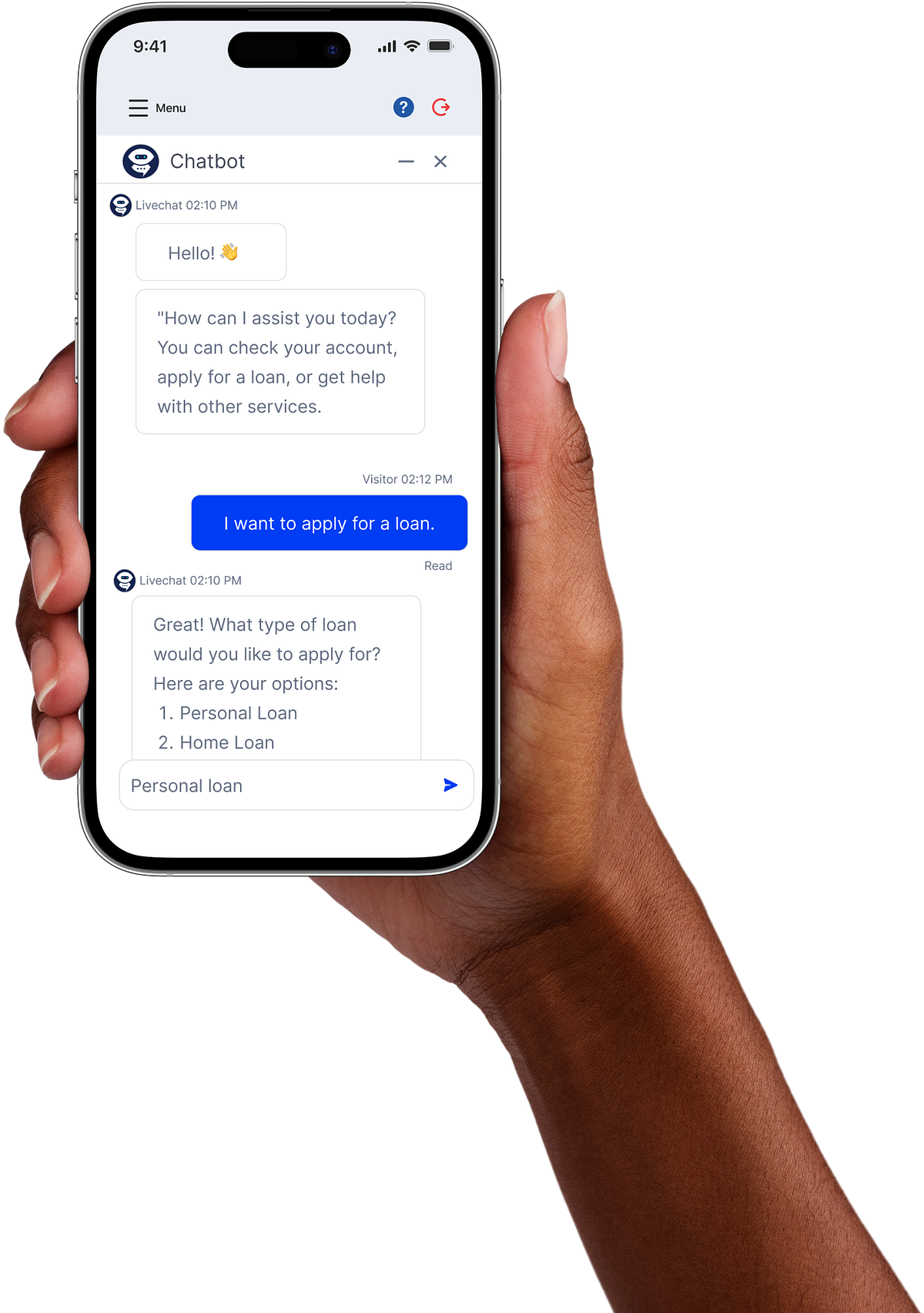
What works: AI voice agents and intelligent chatbots that actually understand context.
Not the garbage chatbots from 2019 that can barely handle “What are your hours?”
I’m talking about systems that can handle complex conversations, book appointments, and qualify leads while you sleep.
Real example: We built a voice agent for a construction company in Dubai that answers incoming calls, qualifies the project, and books site visits.
It handles 80% of their inbound calls without any human intervention.
The owner told me he got back 12 hours per week just from that one automation.
The tools that actually work:
Modern AI platforms use large language models that understand natural conversation.
They can detect intent, maintain context across multiple messages, and hand off to humans when needed.
The key is finding tools that integrate with your existing phone system and CRM.
Not tools that force you to rebuild your entire tech stack.
Document Processing and Data Entry
If anyone on your team is still manually typing information from PDFs into spreadsheets, you’re burning cash.
What works: AI document processing that extracts data automatically.
Invoices, contracts, receipts, forms – all of it can be processed without human hands touching a keyboard.
Real example: A legal firm in Muscat was spending 20 hours per week extracting data from client intake forms.
We implemented AI document processing that cut that to 2 hours per week of quality checking.
That’s 18 hours back every single week.
At $50/hour for admin staff, that’s $46,800 per year saved.
From one automation.
The technology behind it:
Modern OCR combined with AI classification doesn’t just read text.
It understands what the text means and where it should go.
It can tell the difference between an invoice number and a purchase order number.
It knows that “Net 30” means the payment terms, not the product quantity.
This level of intelligence didn’t exist three years ago.
Now it’s standard.
Visit www.taskforceai.tech to see how we’re helping businesses automate intelligently.
Workflow Orchestration and Integration
This is where everything comes together.
You need something that connects all your other tools and makes them work as one system.
What works: Platforms that let you build complex workflows without writing code.
But here’s the key: you need AI that actually makes decisions, not just “if this then that” logic.
Real example: An e-commerce business in Colombo had five different tools for inventory, customer service, shipping, and accounting.
Every order required someone to manually update information in three different places.
We built an intelligent workflow that automatically:
Routes orders based on product type and location.
Updates inventory across all sales channels.
Sends personalized shipping updates.
Reconciles accounting entries.
Flags exceptions for human review.
The result? They scaled from 200 orders per week to 800 orders per week with the same staff.
What makes this different:
The AI doesn’t just move data.
It makes decisions.
It knows when a customer inquiry needs immediate attention versus standard processing.
It recognizes patterns that indicate potential problems.
It adapts based on outcomes.
Email and Calendar Management
Email is still eating up 2-3 hours of your day.
That’s 15 hours per week.
780 hours per year.
What works: AI that triages your email, drafts responses, and actually manages your calendar intelligently.
Not mail merge templates from 2010.
Real example: A CEO I work with in Dubai was spending 3 hours daily on email.
We implemented AI email management that:
Automatically categorizes and prioritizes messages.
Drafts responses to common inquiries.
Schedules meetings based on his actual availability and preferences.
Follows up on outstanding items.
His email time dropped to 45 minutes per day.
That’s 11.25 hours back every single week.
The intelligence factor:
Good email AI learns your communication style.
It knows which clients get immediate responses.
It understands which meetings you actually want to take.
It can detect urgency even when someone doesn’t use the word “urgent.”
This isn’t just automation – it’s augmentation.
Analytics and Reporting Automation
If you’re still building reports manually, you’re competing with one hand tied behind your back.
What works: AI that automatically generates insights, not just dashboards with pretty charts.
Real example: A retail chain was spending every Monday morning compiling the weekend sales report.
Three people, four hours each, every single week.
We automated it so the report generates automatically and includes AI-powered insights about trends, anomalies, and recommendations.
Now Monday mornings are for strategic planning, not data entry.
The difference:
Bad reporting tools show you what happened.
Good AI reporting tells you what it means and what to do about it.
It spots the trend before you do.
It flags the problem before it becomes expensive.
It identifies the opportunity while there’s still time to act.
How to Choose the Right AI Automation Tools for Your Business
Here’s my framework after building hundreds of these systems.
Start With Pain, Not Technology
Don’t start by asking “What’s the best automation tool?”
Start by asking “What’s costing me the most time or money?”
Is it customer service eating up 20 hours per week?
Is it data entry creating bottlenecks?
Is it scheduling chaos?
Fix your biggest pain point first.
The ROI will fund your next automation.
Look for Intelligence, Not Just Integration
Any platform can connect Tool A to Tool B.
That’s not automation – that’s plumbing.
Real automation makes decisions.
It adapts to situations.
It handles exceptions without breaking.
When evaluating tools, ask: “What decisions does this AI make on its own?”
If the answer is “none,” it’s not really AI automation.
Demand Bilingual Capability (If You Operate Internationally)
This one catches people off guard.
If you do business in multiple languages, your AI tools need to actually work in those languages.
Not machine translation that makes your brand sound ridiculous.
Actual native-level communication.
We build systems that operate in both English and Arabic because our clients need both.
A chatbot that only works in English when 60% of your customers prefer Arabic isn’t automation.
It’s a liability.
Calculate Real ROI Before You Buy
Here’s the math that matters:
Time saved per week × hourly rate × 52 weeks = Annual value
If an automation saves your team 10 hours per week, and their time costs $30/hour, that’s $15,600 per year in value.
If the tool costs $3,000 to implement and $100/month, your ROI is 339%.
That’s the math most businesses never do.
They just look at the monthly fee and make gut decisions.
Test Before You Scale
Start with one workflow.
Prove it works.
Then expand.
I’ve seen companies try to automate everything at once.
They spend $50,000, nothing works properly, and they conclude “AI automation doesn’t work for us.”
That’s like trying to learn to drive by immediately entering a race.
Start small. Win. Scale.
Visit www.taskforceai.tech to see how we’re helping businesses automate intelligently.
The Implementation Reality Nobody Talks About
You can’t just buy AI automation tools and expect them to work.
I need to be honest about this because most vendors won’t.
You Need Strategy Before Tools
The best AI driven tools for automation workflow are worthless without proper implementation.
I’ve seen businesses buy the exact same tools we use and get zero results.
Why?
Because they skipped the strategy phase.
They didn’t map their current processes.
They didn’t identify decision points.
They didn’t define what success looks like.
They just started clicking buttons and hoping.
The right approach:
Map your current workflow on paper.
Identify every decision point and handoff.
Determine which steps need human judgment.
Document what data needs to flow where.
Only then do you choose tools.
Integration is Where Most Projects Die
The demo always looks perfect.
Then you try to connect it to your actual systems and everything breaks.
This is why we focus on platforms that have proven integration capabilities.
Not “we have an API” – everyone has an API.
I mean documented, tested, supported integrations with the tools businesses actually use.
Training is Non-Negotiable
Your team needs to understand what the automation does and when to intervene.
I’ve seen perfect technical implementations fail because nobody trained the staff.
They didn’t trust the system.
They kept doing things manually “just to be safe.”
The automation ran in parallel with manual processes, creating more work, not less.
Budget 20% of your implementation time for training and change management.
It’s the difference between adoption and abandonment.
What AI Automation Looks Like When It Actually Works
Let me paint you a picture of proper implementation.
A prospect fills out a form on your website at 2 AM.
The AI voice agent immediately calls them (yes, actually calls, with a human-sounding voice).
It qualifies their need, answers their questions, and books a consultation.
The conversation is transcribed and logged in your CRM.
A personalized follow-up email is drafted based on their specific situation.
Your calendar is checked and the best time slot is automatically selected.
A confirmation with preparation materials is sent.
All of this happens in under 5 minutes.
With zero human intervention.
The next morning, you wake up to a notification that you have three qualified prospects booked for consultations.
Each one has a complete briefing ready for you to review.
That’s what the best AI driven tools for automation workflow actually deliver.
Not “saved a few minutes here and there.”
Complete transformation of how your business operates.
Visit www.taskforceai.tech to see how we’re helping businesses automate intelligently.
Why Custom AI Agents Beat Off-the-Shelf Solutions
Here’s something most articles won’t tell you.
The tools I’ve mentioned are important.
But the real power comes from custom AI agents built specifically for your business.
Off-the-shelf solutions are like buying a suit from a department store.
It might fit okay.
Custom AI agents are like a tailored suit.
They fit perfectly because they’re made for you.
What Custom AI Agents Can Do
Handle complex workflows specific to your industry.
Integrate with legacy systems that standard tools can’t touch.
Maintain your brand voice and communication style.
Make decisions based on your specific business rules.
Scale infinitely without proportional cost increases.
Real numbers: We built a custom AI agent for a professional services firm that handles their entire client onboarding process.
It reduced onboarding time from 3 weeks to 3 days.
It eliminated 90% of back-and-forth email.
It caught errors before they reached clients.
The cost to build it? $12,000.
The annual value? $127,000 in saved time and improved client satisfaction.
That paid for itself in 5 weeks.
When You Need Custom vs. Off-the-Shelf
Use off-the-shelf tools when your needs are common and straightforward.
Email marketing, basic chatbots, simple data connections – standard tools work fine.
Go custom when:
Your process is unique to your industry.
You need deep integration with proprietary systems.
Competitive advantage depends on execution speed.
Your workflow has complex decision trees.
You’re handling sensitive or regulated data.
Most businesses need a hybrid approach.
Standard tools for common functions.
Custom AI agents for competitive differentiation.
AI automation isn’t slowing down.
It’s accelerating.
What’s coming in the next 12 months:
AI agents that can attend meetings and take actions on your behalf.
Predictive automation that fixes problems before they occur.
Multi-agent systems where different AI specialists collaborate.
Deeper integration between communication, operations, and analytics.
Why timing matters:
Your competitors are already implementing this.
The businesses that automate first get the advantage.
They scale faster.
They operate leaner.
They respond quicker.
Every month you wait, they pull further ahead.
I’m not trying to scare you.
I’m trying to wake you up to the reality.
The best AI driven tools for automation workflow are already changing your industry.
The question is whether you’re using them or competing against them.
Common Mistakes That Cost Businesses Thousands
Let me save you some pain by sharing what doesn’t work.
Mistake 1: Automating Bad Processes
Automation makes good processes great.
It makes bad processes consistently bad, just faster.
Fix your workflow before you automate it.
Mistake 2: Buying Based on Features, Not Outcomes
I don’t care if a tool has 500 integrations.
I care if it solves your problem.
Stop comparing feature lists.
Start comparing results.
Mistake 3: Going It Alone
Unless automation is your core competency, you probably shouldn’t build it yourself.
The “we’ll figure it out” approach usually means six months of frustration and $30,000 in sunk costs.
Partner with people who’ve done this before.
Mistake 4: Ignoring the Human Element
AI automation should augment your team, not replace them.
The businesses that succeed treat automation as a tool that makes their people more effective.
The ones that fail treat it as a way to eliminate headcount.
Your best employees will leave if they think they’re training their replacement.
Mistake 5: Stopping After One Implementation
One successful automation should fund the next one.
Then the next one.
Then the next one.
This is a compounding system.
Each automation saves time and money that you can invest in the next automation.
The businesses winning with AI automation didn’t implement one chatbot and call it done.
They built a culture of continuous automation.
FAQ: Best AI Driven Tools for Automation Workflow
What are the best AI automation tools for small businesses just getting started?
Start with customer communication automation because it typically has the fastest ROI.
A properly implemented AI voice agent or chatbot can handle 70-80% of common inquiries without human intervention.
This immediately frees up hours every week while improving response times.
For small businesses, I recommend focusing on one major pain point first rather than trying to automate everything.
Once you see the value from the first automation, it becomes easier to justify and fund additional implementations.
The key is choosing tools that integrate with systems you already use rather than forcing you to change your entire tech stack.
How long does it take to implement AI automation workflows in a business?
A single focused automation can be implemented in 2-4 weeks depending on complexity.
Simple chatbots might take a week.
Custom AI agents with deep integrations might take 4-6 weeks.
The mistake most businesses make is trying to automate everything at once, which can take months and often fails.
The better approach is rolling implementation: start with one workflow, prove it works, then expand.
Most businesses see measurable results within 30 days of their first implementation.
Complete transformation of core business processes typically takes 3-6 months with phased rollout.
Do I need technical expertise to use AI automation tools for my business?
Not anymore – that’s what makes 2025 different from even two years ago.
Modern AI automation platforms are designed for business users, not just programmers.
However, there’s a difference between using pre-built tools and implementing custom solutions.
Basic automation with standard tools requires minimal technical knowledge.
Complex custom implementations benefit from working with specialists who understand both the technology and business process optimization.
The real expertise needed isn’t technical – it’s strategic understanding of where automation adds value and how to implement change in your organization.
Visit www.taskforceai.tech to see how we’re helping businesses automate intelligently.
Ready to Actually Automate Your Business?
If you’re serious about implementing AI automation that actually works – not just looks good in a demo – let’s talk.
We’ve built hundreds of AI automation systems for businesses across the Middle East, South Asia, and beyond.
We specialize in custom AI agents that handle complex workflows in both English and Arabic.
We don’t just recommend tools – we build complete automation systems that integrate with your existing operations.
Our process is simple:
We map your current workflows and identify high-value automation opportunities.
We design custom AI agents specifically for your business processes.
We implement and integrate everything with your existing systems.
We train your team and provide ongoing support.
Visit www.taskforceai.tech to see how we’re helping businesses automate intelligently.
Stop watching your competitors pull ahead.
Start automating properly.
The best AI-driven tools for automation workflow are waiting for you to use them.
Taskforce AI – Explore Our Solutions: Visit taskforceai.tech
Chat with us on WhatsApp (0776697566)